The Andes mountain range hides many biological treasures between its altitudes. One of them is the great diversity of frogs that is coming to light little by little thanks to the work of a Spanish researcher, among others. The biologist has discovered many new amphibian species in the last decade, including a new genus. Its latest finding is that of a small brown frog in the Cordillera Real de los Andes of Bolivia, which due to its limited distribution area should be considered 'vulnerable'.
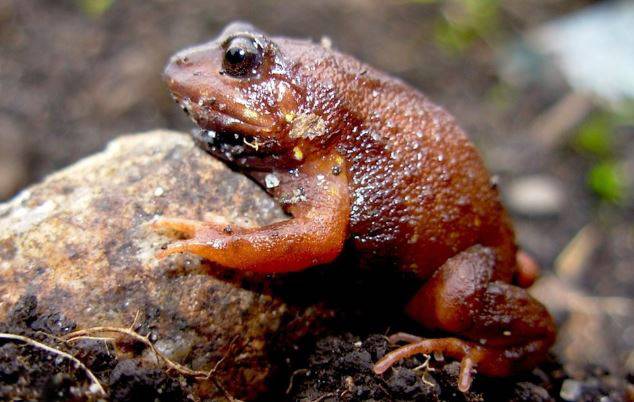
In the last decades, the almost incessant finding of new species of frogs has improved the knowledge we have about them and their diversity. Above all, the unexpected and important deployment of amphibians of the Andes stands out. This is especially surprising in Bolivia in the case of the Microkayla genus, described in 2017 by the Spanish researcher Ignacio De la Riva and his collaborators. The new genus has up to now 25 species.
The scientist at the National Museum of Natural Sciences (MNCN-CSIC) has been discovering, for several years, new species of frogs in the Amazonian slope of the Bolivian Andes. Of the frogs of the new genus described in 2017, until the year 2000, only three species had been found in that area, but the number increased to 17 in the seven subsequent years, thanks in large part to the work of the Spanish scientist. They would not be the only ones: then five more were described and many more are still waiting to be described.
A new study, published in the Zootaxa journal describes the last species discovered by De la Riva in the Cordillera Real of the Bolivian Andes: Microkayla huayna. The amphibian is distinguished by its brown dorsal skin with darker spots especially on the eyelids and sides, and the presence of a large dark brown vocal sac in males.
Although the new species looks similar to eight other species of the same genus found in the same range, it differs in its small size - about 2.6 cm for males - and shorter hind legs.
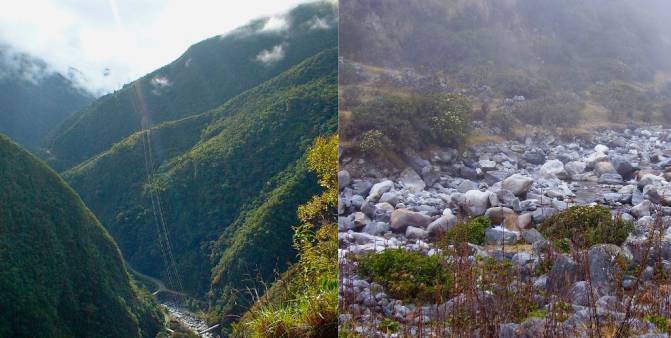
Habitat of the new species in the Zongo Valley in Bolivia. / Claudia Cortez
"There are so many new species that one more is hardly news; it is one of the many species that I have already described and the many that we still have to describe", De la Riva points out.
Microkayla huayna is the second species of the genus discovered in the Zongo Valley, in the Cordillera Real, but its distribution area, probably of less than 2,000 km2 and with only a few known locations, is not included in any protected area. "The new frog seems to be rare or hard to find," the scientists said in the study. It took 12 hours to find a single specimen.
For researchers, climate change, as well as changes in land use, deforestation or global warming poses a threat to this elusive amphibian. For this reason, experts propose in their work that this new species be included in the Red List of the International Union for the Conservation of Nature (IUCN) in the category of 'vulnerable'.
Despite efforts to describe new species, the diversity of Andean frogs is still underestimated. The genus Microkayla is another example that shows that there are closely related genera whose species have small latitudinal and altitudinal distributions.
"The relevant thing is not this species in itself, but the fact that there is an evolutionary radiation of this and other similar genera of frogs in the Andes of Peru and Bolivia, which was unsuspected and that only in recent years has begun to be revealed in all its magnitude," says the Spanish researcher.
According to the scientists, this area of the Andes could be colonized several times independently by species of forest frogs that gave rise to a multitude of species with similar morphologies. The next discoveries of new species of frogs will allow us to better understand how all these species that inhabit such an exclusive ecosystem are related.
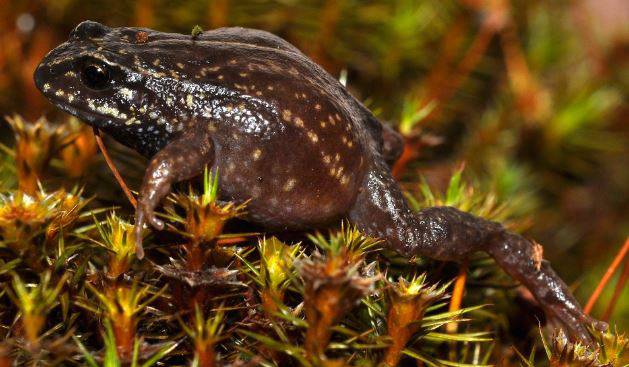
The males of Microkayla huayna can reach 2.6 cm. / Ignacio De la Riva
References:
De la Riva, Ignacio; Cortez, Claudia; Burrowes, Patricia A. “A new species of Microkayla (Anura: Craugastoridae: Holoadeninae) from Department La Paz, Bolivia” Zootaxa 4363(3): 350-360 DOI: 10.11646/zootaxa.4363.3.2 December 2017
De la Riva, I., Chaparro, J. C., Castroviejo-Fisher, S. & Padial, J. M. (2017). "Underestimated anuran radiations in the high Andes: five new species, a new genus, and their phylogenetic relationships (Anura: Craugastoridae)". Zoological Journal of the Linnean Society 182: 129–172.
Climate change and globalisation are accelerating the spread of species outside their natural habitat. This is the case of hymenopterans from Asia that are spreading to other continents, whose bites on people are associated with acute kidney diseases. Spanish scientists want to raise awareness of their health consequences.
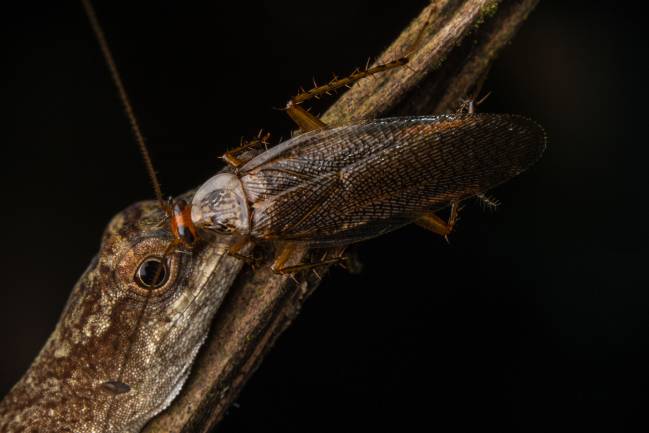
Moths and butterflies are known to complete their diet by drinking the tears of reptiles and birds thanks to the elongated appendage that serves as their mouthpart. But it is not necessary to have such a proboscis to become a “tear drinker”.
Lo sentimos, Inténtalo de nuevo más tarde. .