The role of the immune system in fighting tumours has been well-known since 1890 when it was discovered by chance, but it has taken more than a century to gain real importance. The journal ‘Science’ has chosen cancer immunotherapy as the most significant milestone reached in 2013. This represents a change of strategy: cancer is not attacked directly; rather, the immune system’s army is released to battle with all its artillery. We will learn the full scope of these self-defence techniques over the coming years.
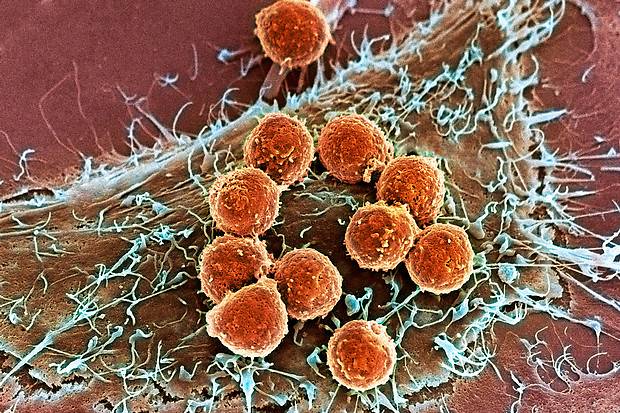
In 1890, William Coley, a surgeon from the New York Cancer Hospital, now called Memorial Sloan Kettering Cancer Center, received a visit from a 17-year-old patient called Elizabeth Dashiell. Her hand had been swollen and painful for days after it had got trapped between two seats on a train.
After several tests with inconclusive results, a biopsy determined that her symptoms had nothing to do with the accident: the girl had developed a sarcoma – a kind of aggressive tumour – and not even amputating part of her arm managed to prevent her death just months later. Obsessed with the case, Coley reviewed the medical literature looking for a more effective procedure. What he found is today considered the initial springboard for immunotherapy.
Years earlier, another sarcoma of a patient diagnosed as incurable reduced until it disappeared after being infected by a bacteria of the Streptococcus genus. Coley thought that the patient’s immune system had reacted not only against the infection, but also against the cancer, and to test it, he infected one of his own patients with the same kind of bacteria. He recovered only a few weeks later.
Spurred on by success, over the following years Coley infected several more patients, trying different combinations. Although he continued to harvest success stories, the procedure only worked on occasions and nobody knew what caused it to succeed or fail. Moreover, it was not so effective on other tumours. Radiotherapy and chemotherapy, which are much more docile and lend themselves to pre-established protocol, were championed as the cancer-fighting weapons of choice.
But his idea was never totally abandoned. In recent decades, various methods for treating cancer via the immune system have been tested: with specific antibodies, cytokines – molecules released during the defensive reaction – and therapeutic vaccinations against the tumour. However, with the exception of certain antibodies, few significant results have been found and there is only one vaccination approved to treat prostate cancer, which has limited effectiveness.
This was the case until 2013, when the results of various clinical trials with a new type of drug put immunotherapy back in the spotlight, so much so that American journal ‘Science’ has named it breakthrough of the year.
The major scientific milestone of 2013
“Did we risk hyping an approach whose ultimate impact remains unknown? Were we irresponsible to label as a breakthrough a strategy that has touched a tiny fraction of cancer patients and helped only some of them?” These are the doubts expressed in the editorial that ‘Science’ dedicates to cancer immunotherapy. And it was presumably this question mark that prevented its competition, the British publication ‘Nature’, from including the breakthrough in its list, although it did dedicate an extensive monograph to it instead.
“Ultimately, we concluded, cancer immunotherapy passes the test,” ‘Science’ affirms. “It does so because this year, clinical trials have cemented its potential in patients and swayed even the skeptics.”
The editors of the prestigious journal are referring to trials with so-called ‘immune checkpoint inhibitors’. These drugs bring the tumour out from where it is hiding from the defence system.
As Antoni Ribas, an oncologist at the University of California in Los Angeles, who is responsible for one of the latest studies that have put immunotherapy back on the map, explains to SINC, the role of the immune system in fighting tumours “has been a very controversial topic over the last 50 years, but it is now proven to have a role in immunosurveillance.”
Not only has it been proven to be more likely to cause cancer in immunocompromised mice; patients with chronic immunodepression, such as those undergoing treatment after an organ transplant, “have a higher incidence of cancers induced by viral infections [such as human papillomavirus for cervical cancer] and carcinogens [such as tobacco for lung cancer],” says the specialist.
In June 2013, during the yearly meeting of the American Society of Clinical Oncology (ASCO) held in Chicago, Ribas and a colleague brought two studies to light, which were immediately published in the 'New England Journal of Medicine’, the most important journal of its kind at clinical level. Both are Phase 1 trials, small, initial studies using various doses to test the safety of a drug, not to establish their actual effectiveness. Both were performed on patients with advanced melanoma resistant to treatment with very short life expectancy.
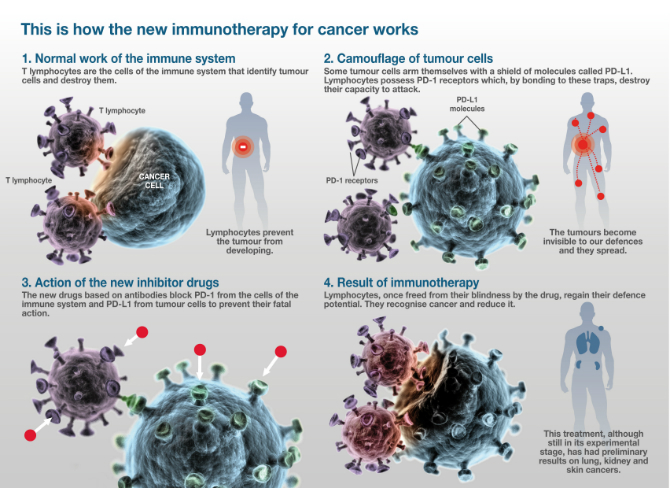
The study led by Ribas included 135 patients who were treated with lambrolizumab, an antibody directed against PD-1. This molecule is an Achilles’ heel in the defences that protect us against cancer, T lymphocytes (or T cells), which destroy tumour cells. When the PD-1 in lymphocytes joins to its complementary PD-L1, located on the surface of the cancer cell, a cascade of reactions occurs, which finally renders the lymphocytes incapable of performing their role. The defences are left powerless against the tumour, which can thus hide away from its constant surveillance.
This is where the lambrolizumab comes into action. The antibody’s mission is to prevent this harmful union, which enables the defences to release their safety brake, recognise the tumour as foreign once more and attack it. There is a change in the paradigm: The cancer is not attacked directly; rather, the immune system’s army is released to battle with all its artillery.
Overall, 38% of patients treated this way responded significantly to the treatment, and this percentage rose for those who received the highest doses. And, although not enough time has passed yet to draw any conclusions, Ribas explains to SINC that, in light of the results, “a lasting response can be invoked in the immune system, although we would surely have to administer long-term treatment in order to achieve this.”
This lasting effect is key. Much personalised medicine is based on targeted therapies that block a particular aspect of each tumour, but in many cases the tumour reoccurs as it adapts to the treatment. In a way, this type of immunotherapy, which recruits a much more versatile army, able to recognise numerous enemies, enables cells with memory to be generated, which are retrained to attack the tumour.
The other study was led by Jedd Wolchok from the Memorial Sloan Kettering Cancer Center in New York (would you remember Coley?). In this case they treated 53 patients with two different antibodies: nivolumab, against PD-1; and ipilimumab, against CTLA-4, another molecule implicated in inhibiting the immune system, whose use for melanoma has been approved since 2011.
The results were very similar to those of the previous study: 40% of patients responded to the treatment, a percentage that rose to 53% when administering the combination of doses that turned out to be the most effective. However, the side effects were notably greater as a consequence of autoimmune reactions. The immune system, now ‘freed’, attacked the patient’s own tissues.
Both of these studies are the backbones on which ‘Science’ justifies its choice. But what happened a year earlier was the real surprise. Ultimately, melanoma is a very specific kind of tumour. If this kind of immunotherapy were effective only for skin cancer, the breakthrough would be important but not revolutionary.
It transpires, however, that another two Phase 1 trials published in 2012 used antibodies against PD-1 or PD-L1 on patients with other kinds of advanced tumour. No improvements were observed in stomach or breast tumours, for example, but a small number of patients with kidney or lung cancer did respond to the therapy.
Although preliminary, these results are a real keystone and fuel the potential of these antibodies to act on a wide range of tumours.
In fact, according to Ribas, “only time will tell which tumours prove to be resistant, but we already know that in some, such as prostate or breast tumours, where there are fewer mutations than in cancers induced by carcinogens, these new drugs do not work as a single agent,” in other words alone, without being combined with other therapies. Wolchok is more ambitious in this regard, claiming that in principle, “no kind of tumour should be excluded from the offset.”
A bright but as yet uncertain future
For José Baselga, Physician-in-Chief at the Memorial Sloan Kettering Cancer Center, who did not take part directly in these studies, “this is probably the biggest breakthrough in recent years. If to this kind of treatment we add cell therapy with T lymphocytes using chimeric receptors [another type of immunotherapy still in its initial stages, but especially promising for blood tumours, such as leukaemia and lymphomas], it could change the way we treat cancer and increase the survival rate.”
This being said, “the evidence to date is only for melanoma and for lung and kidney cancers. For other tumours, although there are studies in progress, it is still very early,” he tells SINC.
At the moment there is only one approved drug (ipilimumab) and it is only approved for melanoma. It will be some time before we know whether new treatments will be brought onto the market and for what kind of tumours. Not only this: we need to determine precisely what potential side effects there are, as well as identifying biomarkers to predict which patients will benefit and which will not.
One of these markers could be PD-L1 but, as Wolchok explains to SINC, “its expression is dynamic and can vary with time.” In fact, “no marker has yet been identified which would let us know whether a patient will benefit or not,” he adds.
Furthermore, this kind of immunotherapy could be administered in conjunction with those already existing or with others currently being studied, including chemotherapy, radiotherapy, targeted therapies or even vaccines, which would require several further studies.
Another issue will be the cost, as “they will almost certainly be expensive drugs,” Ribas muses. Although he adds that, from a broader viewpoint, “they might be cheaper in the long run, because treating metastatic cancer effectively and avoiding the greater costs that come with treating a significant portion of patients at terminal stages will save money.”
This article, like the editorial in ‘Science’, concludes: “Even in the fluid state oncology now finds itself, this much is certain: one book has closed, and a new one has opened. How it will end is anyone’s guess.”

Experts from the Basque research centre BCBL have shown for the first time that the way in which the activity of two brains is connected depends on whether the dialogue takes place in the native language or in a foreign language.

The brain is not only able to finish the sentences of others. A study by the Basque research centre BCBL has shown for the first time that it can also anticipate an auditory stimulus and determine the phonemes and specific words the speaker is going to pronounce.
Lo sentimos, Inténtalo de nuevo más tarde. .