Scientists working on the LIFE IBERLINCE project have spent six years studying the hunting behaviour of the Iberian lynx (Lynx pardinus), registering a total of 40 attacks with 716 farm animals killed. Their results indicate that, although the resulting economic losses are not high, this behaviour is on the rise, and it is therefore necessary to establish conflict prevention programmes alongside the existing conservation programmes.
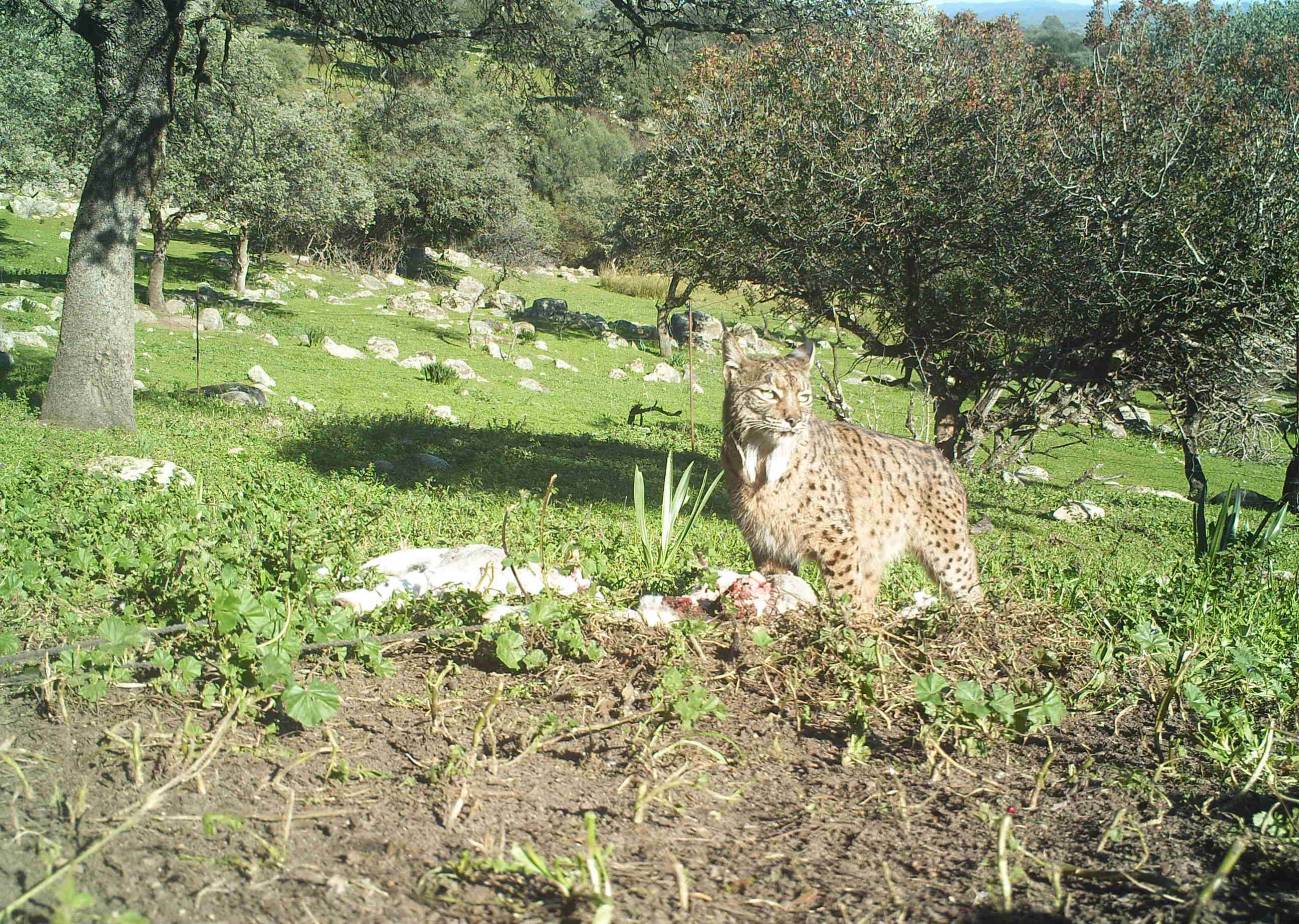
Científicos del proyecto LIFE IBERLINCE han estudiado durante seis años los comportamientos de caza del lince ibérico (Lynx pardinus) hasta contabilizar un total de 40 ataques con 716 muertes a animales de granja. Sus resultados indican que, aunque las pérdidas económicas no son altas, este comportamiento aumenta, por lo que se deben crear programas paralelos a su conservación que eviten los conflictos.
Most studies on depredation of livestock in Spain have focused on wolves and little attention has been given to this type of conflict in smaller species.
Within the LIFE IBERLINCE project, “Conservation and reintroduction of the Iberian lynx (Lynx pardinus) in Andalusia”, a team of scientists has spent six years monitoring lynxes’ hunting habits in areas with nearby settlement. In the eight years since this initiative began, the number of lynxes in Spain has trebled.
“We have counted a total of 40 attacks on farm animals, involving 716 kills, in the area of Andújar-Cardeña, one of the hubs – along with Doñana – in which members of this species in danger of extinction are centred,” explains German Garrote, co-author of the study and researcher on this project.
Although the majority of these attacks (78%) were carried out against poultry, sheep depredation resulted in higher economic losses”.
“Quite possibly, when the lynx was present all over the peninsula, these attacks were common, but as they now have a very limited distribution and, until not so many years ago, they rarely came into contact with domestic animals, we did not see as much conflict. Now that the species is expanding again, it is reaching more inhabited areas,” the expert highlights.
Compensation to farmers
Parallel to its conservation programme, the group created a compensation scheme to mitigate the consequences of the conflict between humans and lynxes in this area. “It is about payments for damages to livestock in areas where the attacks have occurred,” notes Garrote.
Economically, these damages are not very significant in comparison with the money invested in their conservation. However, the team has already begun to erect electric fences to avoid attacks to sheep, with an ideal result.
“What we aimed with this study was to find out what the conflict is, demonstrate that these conflicts occur and work out how to solve them, in order to anticipate problems that might arise in the future with this species, which is colonising more developed areas, as happens with the wolf, whose conflict is much more generalised,” the researcher concludes.
References:
Germán Garrote, Guillermo López, José M. Gil-Sánchez, Eva Rojas, Manuel Ruiz, José F. Bueno, Santiago de Lillo, Javier Rodriguez-Siles, José M. Martín, Joaquín Pérez, Maribel García-Tardío, Gerardo Valenzuela, Miguel A. Simón “Human–felid conflict as a further handicap to the conservation of the critically endangered Iberian lynx.
Climate change and globalisation are accelerating the spread of species outside their natural habitat. This is the case of hymenopterans from Asia that are spreading to other continents, whose bites on people are associated with acute kidney diseases. Spanish scientists want to raise awareness of their health consequences.
Moths and butterflies are known to complete their diet by drinking the tears of reptiles and birds thanks to the elongated appendage that serves as their mouthpart. But it is not necessary to have such a proboscis to become a “tear drinker”.
Lo sentimos, Inténtalo de nuevo más tarde. .