Doñana National Park is the framework of a recent study, participated in by Spain, which unveils one of the mechanisms used by tawny owls to avoid being hunted by Eurasian eagle owls: changing their territorial call when they sense the presence of their predator. However, if there is a prevalence of males in the environment, they prefer to run the risk and continue calling.
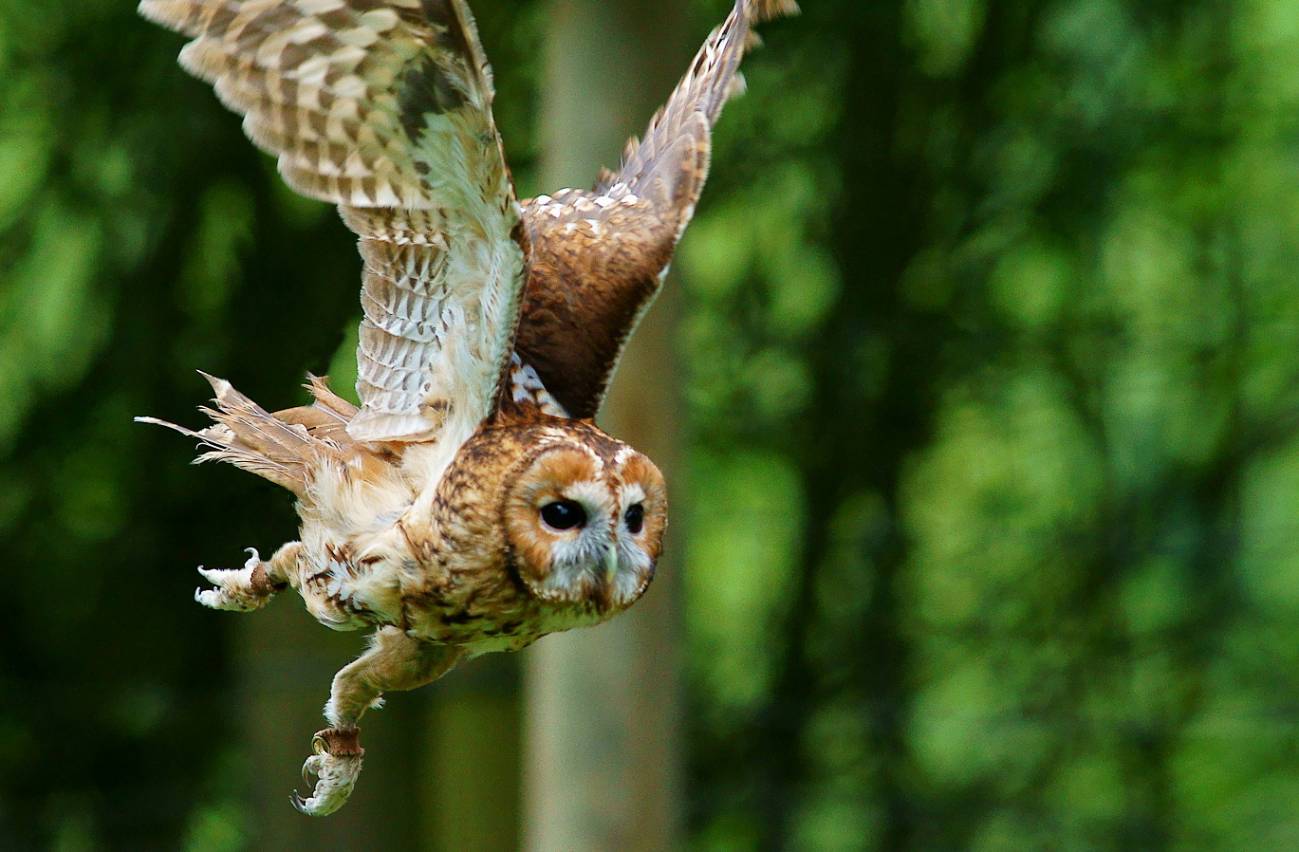
Although eagle owls hunt tawny owls and both of these nocturnal birds of prey compete for food, they tend to co-exist. A study with the participation of the Doñana Biological Station has revealed one of the mechanisms developed by tawny owls to reduce the risk of eagle owls discovering them: lowering its calling rate when it hears its predator’s call.
Experts from the University of Évora (Portugal) and Scottish National Heritage (United Kingdom) also collaborated in the research project conducted in Doñana National Park, the results of which were published recently in the ‘Journal of Avian Biology’.
The study is the first to confirm the hypothesis that the tawny owl (Strix aluco) is capable of interpreting the sounds made by eagle owls (Bubo bubo) to determine their location and thus evaluate what risks they are running.
As Rui Lourenço, one of the authors of the study and a researcher at the Doñana Biological Station, explains to SINC: “Tawny owls respond by lowering their calling rates so as not to be so easily discoverable, thus reducing the likelihood of their being hunted.”
This reaction does not occur when there is a very high number of male tawny owls, because their territorial behaviour (they identify intruders using sounds) is so important for the species that they put it ahead of any predatory threat, despite potential fatal consequences.
Two birds that must live side by side
The risk of there being a predator nearby leads the tawny owl to choose one habitat or another and this has an impact on its population size and the success of its hunting. This is why they tend to avoid places occupied by eagle owls when they can.
However, sometimes these species must live side by side, as the territories chosen by the predator are rich in small mammals and birds, which also constitute the main source of food of their prey.
The relationship between these two birds of prey is one that in ecology is called intraguild predation, “that which occurs between competing species,” Lourenço clarifies.
The researchers set up an area of study comprising 29 locations in which the presence of the birds had been confirmed.
Between March and April 2008, and between September 2008 and March 2009, 166 listening sessions were held by visiting each of the 29 sites four to six times. During this time, the calls made between half an hour before and 90 minutes after sunset were recorded.
“The nocturnal context of these interactions is important, because these birds of prey often use sound to detect their prey and in this case we saw that they also use it to discover predators and assess risk,” according to the researcher.
The results can be explained by the fact that eagle owls emit more sounds during the first half an hour in the absence of light and tawny owls do so later, which gives them time to detect their predators, gauge their location and then modulate their calling.
It was found that the result occurred immediately after hearing the eagle owls, but then disappeared with time.
Although there is already research on this type of behaviour in small day birds, few studies have considered this phenomenon in nocturnal birds of prey.
“Until 2000, researchers were not so aware that predators like birds of prey and carnivorous mammals are at risk of predation,” concludes Lourenço.
Bibliographic reference:
Rui Lourenço, Fernando Goytre, Maria del Mar Delgado, Michael Thornton, João E. Rabaça and Vincenzo Penteriani. “Tawny owl vocal activity is constrained by predation risk”. Journal of Avian Biology44: 461–468, 2013.
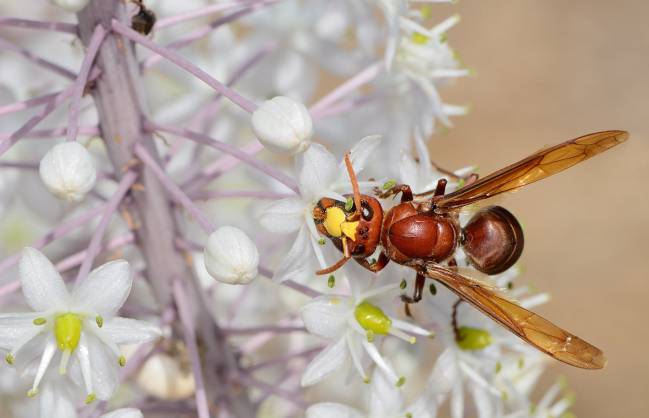
Climate change and globalisation are accelerating the spread of species outside their natural habitat. This is the case of hymenopterans from Asia that are spreading to other continents, whose bites on people are associated with acute kidney diseases. Spanish scientists want to raise awareness of their health consequences.
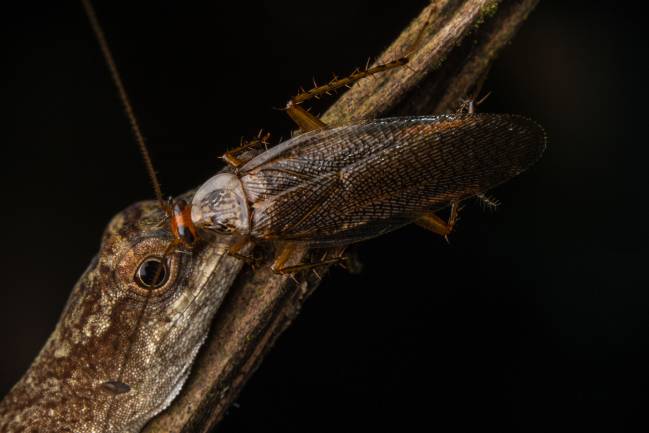
Moths and butterflies are known to complete their diet by drinking the tears of reptiles and birds thanks to the elongated appendage that serves as their mouthpart. But it is not necessary to have such a proboscis to become a “tear drinker”.
Lo sentimos, Inténtalo de nuevo más tarde. .