A review in the journal ‘Sports Medicine’ concludes that our ancestors´ lifestyle would help modern athletes to adapt better to training and improve their performance.
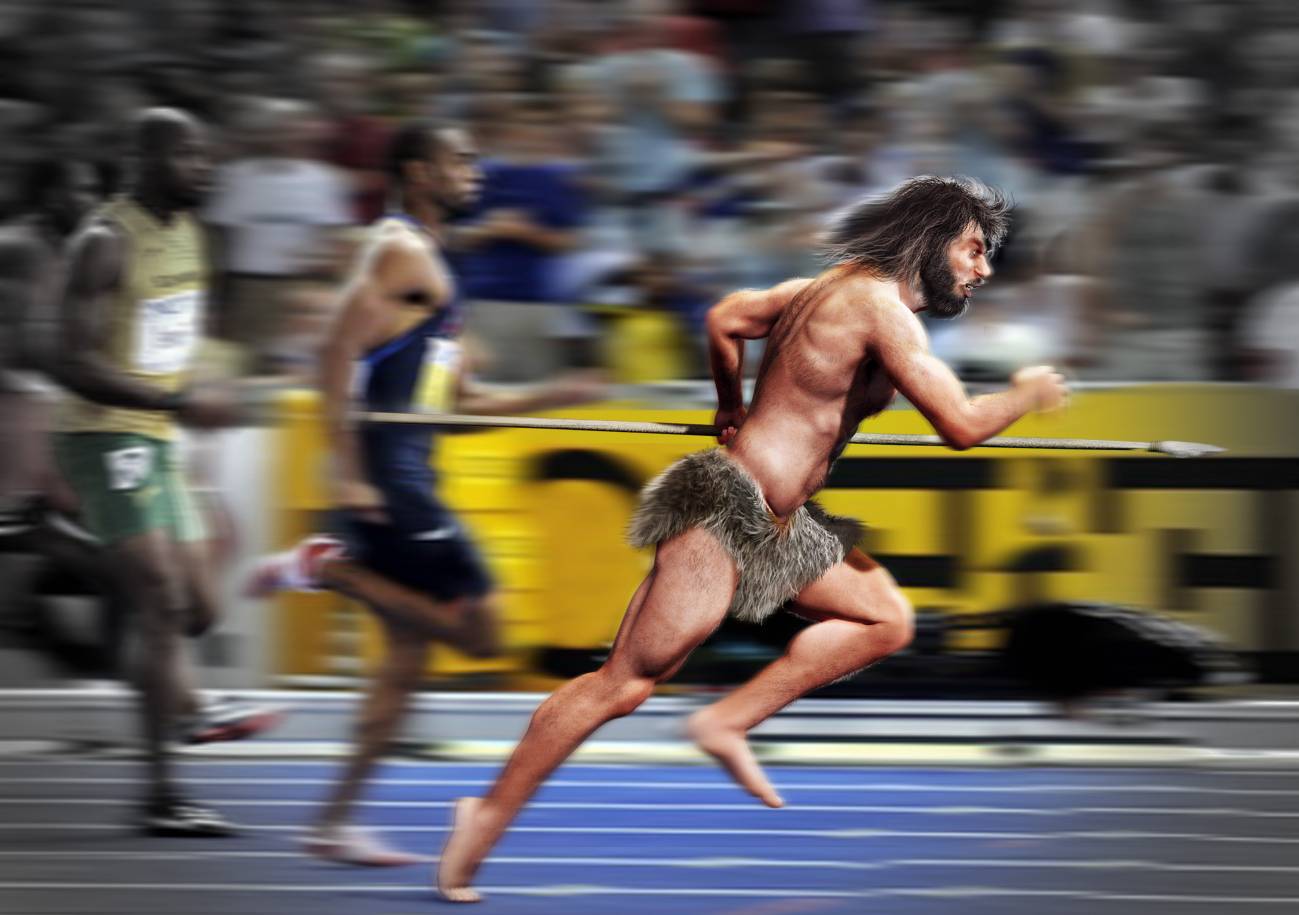
Un trabajo de revisión en la revista Sports Medicine concluye que el estilo de vida de nuestros ancestros ayudaría a los deportistas modernos a mejorar sus adaptaciones al entrenamiento y aumentar el rendimiento.
Every four years, some 10,000 men and women compete in the Olympic Games, dedicating several years to physical training to ensure they give the best performance possible during the competition.
Although every athlete prepares for the specific physiological demands of their event, they all have one thing in common: they are Homo sapiens. That is, they share a genome which is the result of evolution and which is beyond their control.
Researchers from the Catholic University of Brasilia (Brazil), and the Universities of the Basque Country and A Coruña, together with the independent researcher Laurinda Abreu, have published an article in the journal Sports Medicine affirming that the more similar a modern athlete’s lifestyle is to that of his ancestors, the better adapted he is to training and thus the better his performance.
“An athlete’s training cannot stray too far from competitive demands. However, he can make changes to his lifestyle and training that will positively affect his physiological development, since his genome is better adapted to his ancestor’s lifestyle,” Daniel Boullosa, professor and researcher at the Catholic University of Brasilia and lead author of the study, tells SINC.
Due to the course of evolution, genetic changes occur very slowly in Homo sapiens, whereas physical activity and eating habits have undergone very rapid change within a few centuries.
“We present scientific evidence which supports the validity of this model. The ancestral pattern we refer to in this study is characterized, among other matters, by the prevalence of prolonged daily activities of low-intensity physical activity, interspersed with periodic short-duration intensive efforts,” Boullosa explains.
At present Adrián Varela-Sanz, co-author of this study, is analyzing the results to create a model and compare two strength and endurance training programs of similar intensity and short duration, but with different organization.
“Our species (Homo Sapiens), and therefore our genome, has been the same for 200,000 years. However, the environment and conditions for survival have changed, causing a big imbalance between our genetic make-up, which is adapted to specific evolutionary requirements over millions of years, and our current lifestyle,” the researcher notes.
Lack of oxygen and irregular eating
According to scientists, our hominid ancestors lived predominantly in conditions of moderate hypoxia – low oxygen pressure – at altitudes of between 1,000 and 2,000 metres, whilst dietary carbohydrate consumption was probably lower than at present.
“There is scientific evidence to suggest that living in conditions of hypoxia improves performance principally in endurance sports, although there is also some evidence in team sports. Another example concerns fasting and training,” he adds.
Although it has been shown that dietary carbohydrate is important in order to respond to the physical demands of very intense sports, it has also been shown that the molecular signalling necessary for muscle adaptation is greater when training with a low carbohydrate load in certain circumstances.
“This can be understood if we consider that the diet of our ancestors was always very irregular, since they went from times of plenty to times of famine on a frequent basis,” the scientist affirms.
With regard to endurance athletes, researchers point out that there is increasing acceptance of the greater effectiveness of polarized training, which involves training mainly at low intensity (80%), even though competitive demands are at higher intensities.
”In this respect, a very interesting strategy to adapt this concept to intermittent sports, like football or tennis, would be to make sure that outside of regular training the athlete does low-intensity activity in their free time, without spending many hours sitting or lying down, to promote the physiological adaptations of the specific training,” Boullosa concludes.
References:
Daniel A. Boullosa, Laurinda Abreu, Adrián Varela-Sanz, Iñigo Mujika. “Do Olympic Athletes Train as in the Paleolithic Era?” DOI 10.1007/s40279-013-0086-1

In addition to being a benchmark in the field of molecular biology, Margarita Salas was a scientist who was known to the public, something almost miraculous in a country like ours, let alone with women.
Spanish and Italian researchers have proven that when honey from strawberry trees, a product typical of Mediterranean areas, is added to colon cancer cells grown in the laboratory, cell proliferation is stopped. The authors hope that these promising results and the anti-tumour potential of this food will be confirmed in in vivo models.
Lo sentimos, Inténtalo de nuevo más tarde. .