Many students have felt intimidated by maths. There are many resources to teach you how to enjoy them, from magic to beans and apps. Experts in didactics insist on two keys for teachers and students: mistakes are part of the process and solving problems mechanically does not make sense. It is a matter of integrating them in one’s day-to-day life and learning to think.
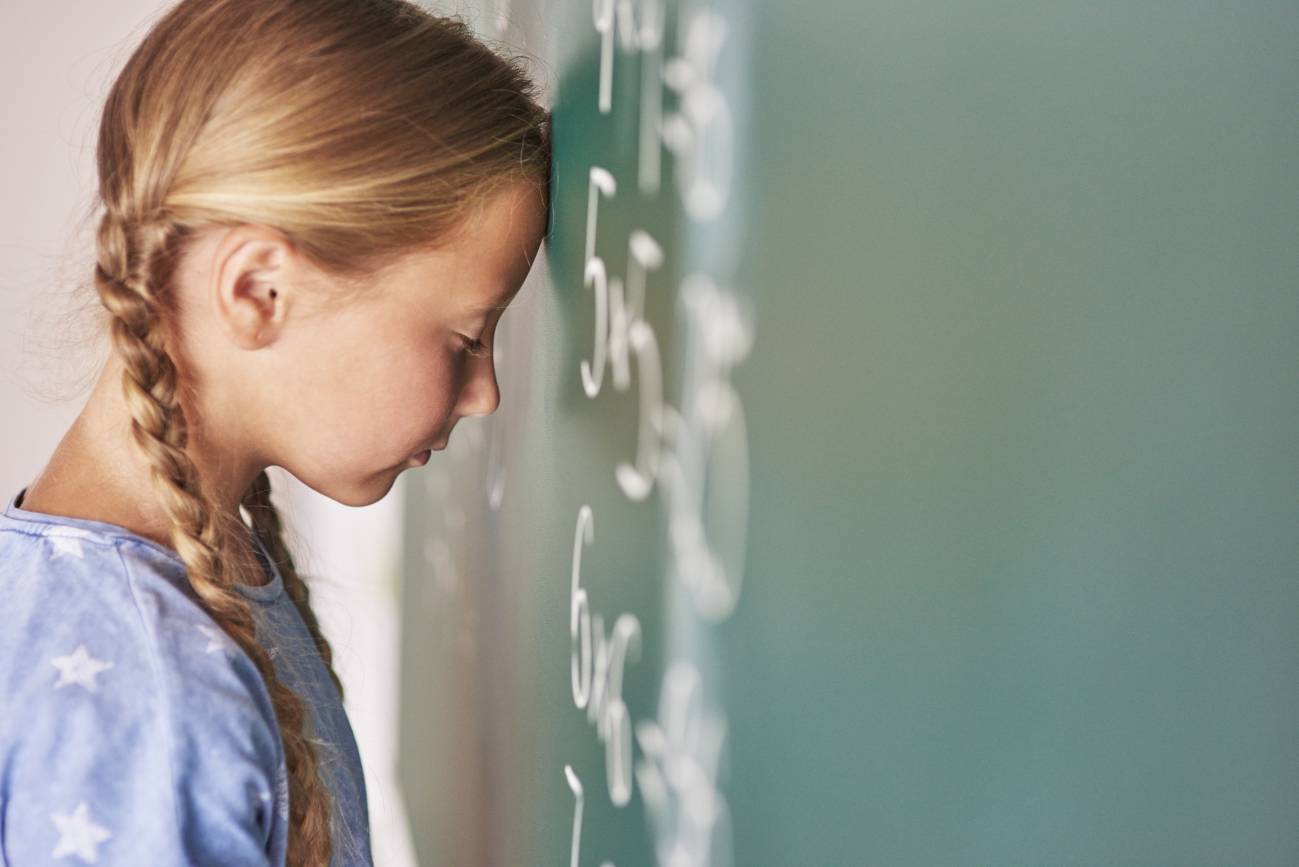
The fear of mathematics is a real one. It is the most feared subject due to its level of abstraction, even at its lowest levels. Facing mathematics causes anxiety, sweating and even physical pain.
This aversion manifests itself at an early age, “when children find it difficult to count or compare magnitudes”, as Erin Maloney, professor of cognitive psychology at the University of Ottawa (Canada), has explained to Sinc. This specialist in learning problems seeks to have the results of her studies on numerical anxiety applied to change educational practices and policies.
Mathematics is a ladder where each rung matters. “At the age of about six, children compare themselves with others and decide if they are good at maths. If they conclude that they are not, they become disillusioned and their learning gets worse”, says the writer and mathematician John Mighton, founder of the JUMP Math program, which has been designed for teachers to restore confidence to students. He himself had problems with the subject when he was a young boy.
Recent works suggest that this blockage is the product of something more than poor skills and has much to do with psychosocial factors. A study of 181 first-year students at the University of Western Ontario (Canada), published in 2015 in the Frontiers in Psychology journal, showed that anxiety about numbers depends on the way each one integrates mathematics into their own personality, everyday lives and in way of facing life.
Some teachers think that mastering mathematics is just a matter of motivation and desire. This was the case of Onofre Monzó, president of the Spanish Federation of Mathematics Teachers (FESPM), who after more than thirty years of teaching is no longer that sure: “It is obvious that there are people with a special ability for mathematics, as happens with the artistic predisposition”.
Even so, making mistakes in this matter should not be a problem. “It requires practice and it’s important for students to understand that making mistakes is part of the learning process”, adds Professor Maloney. It is precisely the fear of failure that causes rejection in many students. So, why are people still talking about bad maths students?
“Neither the school nor the families accept the origin of the problem”, explains Luis Rico, professor of Mathematics Didactics at the University of Granada. “When a student shows symptoms of dyslexia, support strategies are sought, but an intellectual block with arithmetic is misinterpreted as a limitation or impossibility on the student’s part”, observes the academic. “Maybe what he needs are resources, support teachers or exercises”, he adds.
From the moment they enter the classroom, both the students and the teacher have expectations about what is going to happen. This is one of the problems of the current didactics of mathematics, explains José Ángel Murcia, a mathematician and university professor specialized in teacher training.
“In the face of a problem, students have been accustomed to identifying the data, applying the right operations for the moment and looking for a single solution. But mathematics should be something else”, states Murcia.
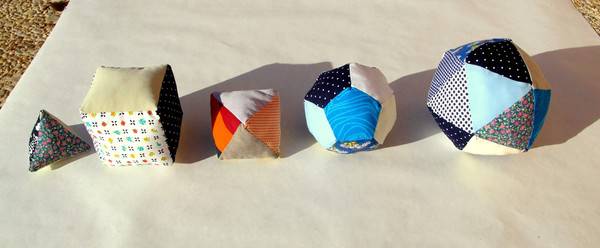
He proposes breaking the 'didactic contract' with problems where the formulation is deceitful or the exercises have several solutions, as in the comparison of geometric figures. He collects such resources in his blog Tocamates, which, according to his own declaration of intent, is “a proposal for mathematics to be touched, felt and enjoyed”.
According to this populariser of maths, today's classroom does not encourage critical reasoning, divergent thinking or creativity. “Arithmetic is the block that takes up the most time in primary and secondary education, but it can be standardized as well as outsourced to machines. Other blocks such as measurement, geometry and statistics and probability aren’t enhanced”, he laments.
Murcia's proposal is not new. As early as in 1979 Stuart Plunkett, of Homerton College, Cambridge (United Kingdom), published a paper entitled Decomposition and All That Rot, in which he analyzed how we learn to calculate and established when the operations had to be solved in one’s head, with pencil and paper, or with technology. “He was ignored. 40 years have already passed”, adds Murcia.
To learn by touching, in some schools in Mexico, a system of addition and multiplication based on the use of twigs, beans and macaroni has been implemented. It is the Mayan system of mathematical operations, with which children of between six and eight consolidate the elementary structures of logic and abstract thinking. Just as their ancestors did.
Whoever wants to practice these skills can do so with an online Mayan Math game created by the Smithsonian Museum of the American Indian.
But you do not have to cross the ocean to find original didactic initiatives. In Albaida del Aljarafe, a village in the province of Seville, Xuxo Ruiz has been a tutor at the CEIP San Sebastián school for ten years. And he is also a magician. During his twenty years' experience in primary education he has used magic to teach physical education, environmental knowledge and mathematics.
His method made him the Spanish nominee for the 2018 Global Teacher Prize, the 'Nobel Prize for teaching', which has a million-dollar prize.
“Spare the magic and spoil the child”, Ruiz explains to Sinc. The teacher says that with 'mathemagics' his students are more motivated; enhance their creativity and improve their communication skills. “After explaining a mental calculation game, children perform magic tricks before their classmates, other teachers and their parents. They would never go to the playground during breaks to do calculus”, says the teacher. “They connect at an emotional level and don’t forget these explanations”, he insists.
However, not all teachers can be 'mathemagicians' or need to be. Monzó warns that “what works with one teacher may not work with another. Magic is one resource among many others within the wide range teachers must have at their disposal”.
Among the didactic resources for practicing mathematics there are countless apps that some teachers use in the classroom.
For example, with Kahoot students create an online user in their own smartphones. “On the blackboard, questionnaires are projected, ranging from concepts to equations”, explains Ana Belén Martín, a mathematics teacher at the IES Antonio Calvin de Almagro, Ciudad Real. By identifying students by their usernames, it is possible to implement customized reinforcement plans.
With Photomath, students get the solution to the problems by scanning the operations with the camera of their smartphones. Although it might seem like the ideal tool for copying, “teachers can tell when students solve exercises in a very different way from how it was explained in class”, Martín assures.
Murcia explains that the teachers he trains ask him for tools of this type. In his Tocamates' blog, he collects strategies such as “the rest counts” to practice division or the number plates game for multiplication.
But what matters for him are not apps or games, but the method: “The idea is not to produce a resource, but to use it as an example of a methodology that allows children to practice mathematics inside and outside the classroom in a more experiential and productive manner”.
The more progress is made in teaching, the more complex the subject becomes until it “acquires its own, abstract and formal language, which in some cases is a problem”, says Monzó. Mathematical anxiety manifests itself when it comes to choosing university education; it is greater in health studies than in technical or social science courses, and it is accentuated in women.
And it also marks future maths teachers. “Mathematicians demand a level of formalism that can cause teachers of elementary levels to have a complicated relationship with the subject”, Murcia explains.
Perhaps because of this, digital teachers have been gaining much popularity among late high-school and early university students. Some of these youtubers like David Calle (unicoos) or Sergio Castro (profesor10demates) have been nominated for several awards. The former has one million subscribers.
But YouTube lessons are no panacea. “Beginning a free educational route that, upon reaching a certain point, asks us for commercial compensation without offering valid guarantees is something to be avoided”, warns Rico.
Monzó insists on the importance of the personal relationship between teacher and student. “Digital education perpetuates the traditional type of 50 years ago if the relationship with that teacher consists, at most, in moving forward or backward in the video. You can repeat the same thing a thousand times but there is no interaction”.
For the president of the FESPM, the renewal of teaching methods requires the renewal of the teaching staff. “It means rethinking access to teacher training schools and the training of teachers and graduates in mathematics. A continuous training of practicing teachers must be planned”, Monzó concludes.
Murcia goes even further: “The solution is not to demand a higher level to enter the Faculty of Education” he muses, “but to ask ourselves what to teach in mathematics and how to teach it”.
The PIACC report measures the mathematical skills of adults. In a list of 23 countries, Spain is in the last place and Japan in the first. In the PISA program - which measures the skills of 15-year-olds - Spain's position in mathematics is not good either. Experts provide a different view.
Luis Rico participated in a meeting about PISA in Spain with representatives of the Asian countries that score the best. One of the insights of those meetings was that, although the Asian countries are at the forefront in performance, they score very poorly on the attitude.
“The attitude of Spanish students is better than that of Asians. Ours make mistakes more often, but they are not so frustrated. Making fewer mistakes entails more work and a level of pressure that eventually generates rejection”, he explains.
According to the president of the FESPM, “although we could do better, in Spain there is a very high rate of school failure and PISA also includes repeaters. Our inequalities are due to the socioeconomic level of the families, and that is why it’s more difficult to intervene”.

Now is the centenary of the eclipse that confirmed the theory of general relativity. "Every day, when we search the mobile phone map for a trajectory from our position, we are benefiting from Einstein's being right in making such a powerful and precise theory about what space and time are like," explains astrophysicist and disseminator Javier Armentia.

A statistical analysis of the effects of very hot nights on the death rate in Barcelona’s environment reveals that, during these nocturnal periods, more deaths occur due to natural, respiratory and cardiovascular causes. Although this year would seem to break the trend, the number of ‘tropical’ nights has increased in the Catalan capital over the last few decades.
Lo sentimos, Inténtalo de nuevo más tarde. .