
Back in 2004, Andre Geim and his colleague Konstantin Novoselov isolated graphene. This kicked off the development of a new material that, despite not having unveiled all its potential yet, earned them the Nobel prize in Physics in 2010.
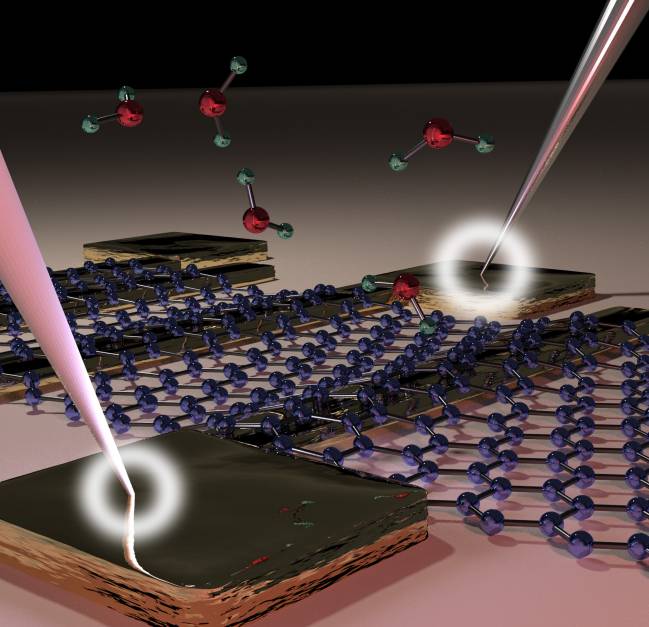
Water molecules distort the electrical resistance of graphene, but now a team of European researchers has discovered that when this two-dimensional material is integrated with the metal of a circuit, contact resistance is not impaired by humidity. This finding will help to develop new sensors –the interface between circuits and the real world– with a significant cost reduction.
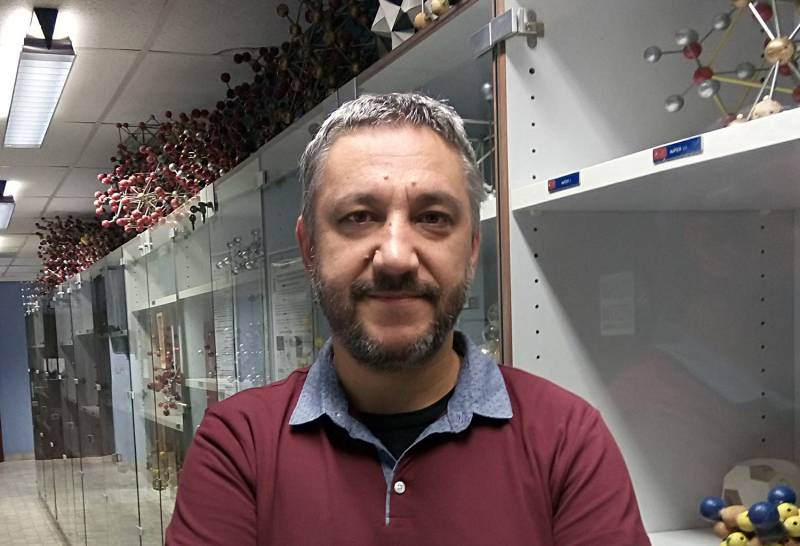
Graphene is starring the largest European research initiative to date, Graphene Flagship, but within this megaproject are also being promoted studies of other two-dimensional materials, such as TMD. Their interesting properties can be applied in electronics, spintronics and a third field: valleytronics, as the physicist Dr. Lucian Covaci of the University of Antwerp explains in this interview.
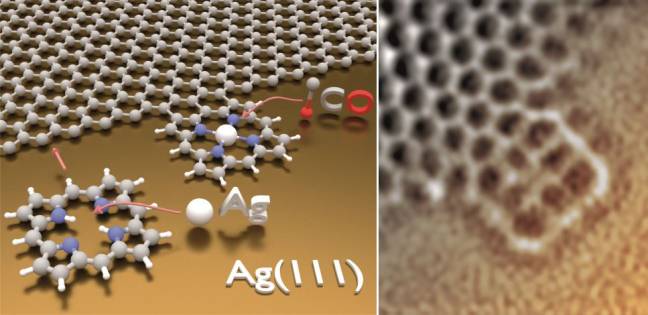
Porphyrins, the same molecules that convey oxygen in haemoglobin and absorb light during photosynthesis, can be joined to the material of the future, graphene, to give it new properties. This was recently shown by a team of scientists at the Technical University of Munich, in which a Spanish researcher also participated. The resulting hybrid structures could be used in the field of molecular electronics and in developing new sensors
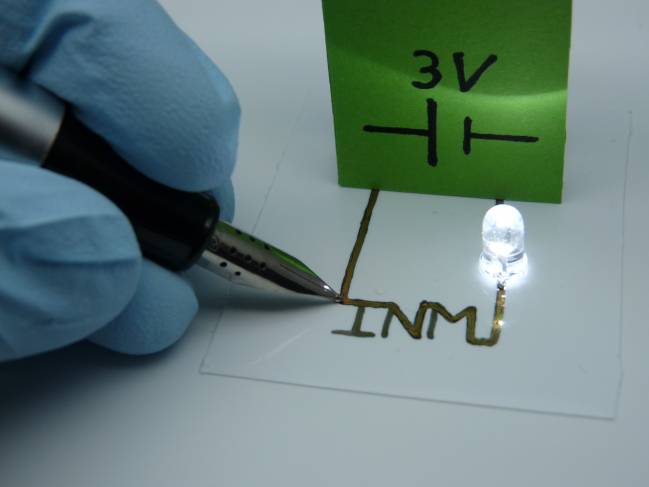
Imagine a pen that 'writes' real electronic circuits capable of conducting electricity and lighting up LEDs. This breakthrough, presented this week at the international fair in Hannover, was achieved by researchers from the Leibniz Institute for New Materials (Germany) with the collaboration of a scientist from Spain. The secret is a hybrid ink formed by gold nanoparticles and a conductive organic polymer.
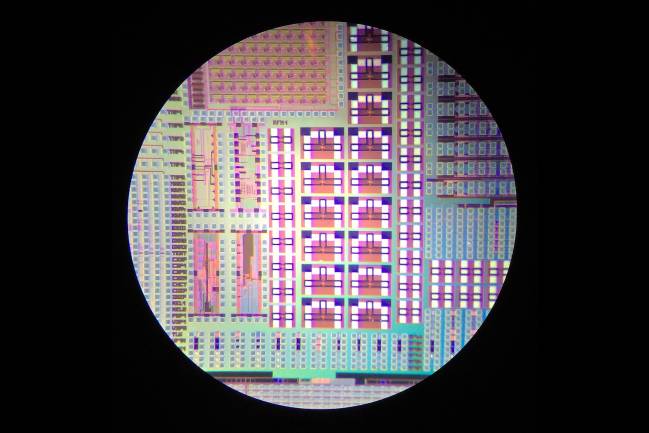
A Spanish-led team of European researchers at the University of Cambridge has created an electronic device so accurate that it can detect the charge of a single electron in less than one microsecond. It has been dubbed the ‘gate sensor’ and could be applied in quantum computers of the future to read information stored in the charge or spin of a single electron.
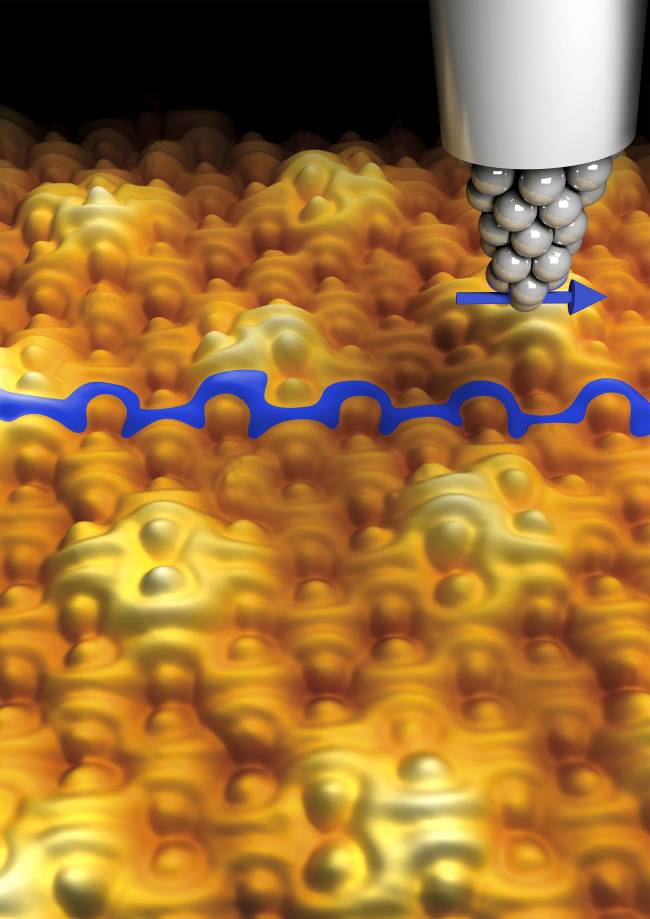
Researchers from IMDEA-Nanociencia Institute and from Autonoma and Complutense Universities of Madrid (Spain) have managed to give graphene magnetic properties. The breakthrough, published in the journal ‘Nature Physics’, opens the door to the development of graphene-based spintronic devices, that is, devices based on the spin or rotation of the electron, and could transform the electronics industry.
Lo sentimos, Inténtalo de nuevo más tarde. .