
Less educated young men are those who share a greater amount of discriminatory content on Facebook, while young university females share the least. According to a study conducted by sociologists at the University of Rovira i Virgili (Spain), there is a feminine way as well as a masculine way to behave on the Internet: males tend to directly allude to ethnic and cultural issues whereas females are less obvious in doing so. The study is part of a European project that aims to fight these behaviours.
Research carried out at the Universidad Carlos III de Madrid (UC3M) analyzes the participation and receptivity of the messages emitted during the last European elections in 2014. The main conclusion the study reached is that there are two levels of conversation with scarcely any points of connection: on one level are the politicians, controlled by the parties and candidates; on the other are the citizens, freer in their structure and the subjects dealt with.

The Spanish Mortgage Victims Group (‘Plataforma de Afectados por la Hipoteca’– PAH)has managed to stop 1,663 evictions in Spain since it was founded in Barcelona in 2009. A team of researchers has analysed the keys to its success and the rapid expansion of this social movement that according to the authors “attempts to put justice before legality when the law is manifestly unjust”. The study is the first objection of its kind by the scientific community.

Researchers at the University Carlos III of Madrid, in collaboration with the Spanish firm Aliad Conocimiento y Servicio, have developed a software platform to help promote active and healthy aging in the context of an European project. The system contains news, forums, videos, social networking, mobile applications and games to promote mental activity and a training program. The offer has already attracted more than 11,000 users and is expected to reach 20,000 at the end of this year

Millions of Twitter users are constantly reporting where they are and what they are doing. With this information, two Spanish computer science experts suggest using geolocalized tweets for urban planning and land use. They have already done it in Manhattan, Madrid and London and have been able to identify, for example, nightlife areas of these large cities.
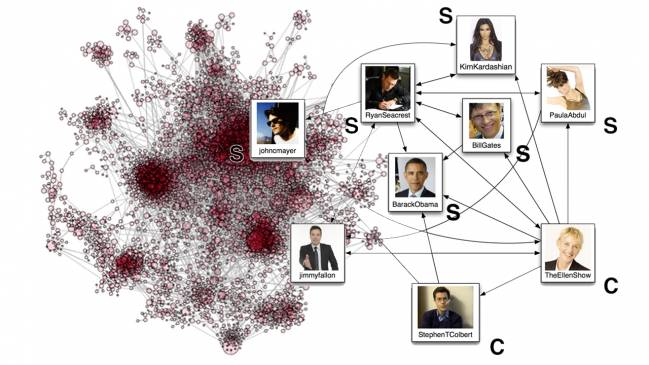
A new method of monitoring identifies what information will be relevant on social networks up to two months in advance. This may help predict social movements, consumer reactions or possible outbreaks of epidemics, according to a study in the Universidad Carlos III of Madrid (UC3M) is participating.
Lo sentimos, Inténtalo de nuevo más tarde. .