Scientists from Tarbiat Modares University (Iran), in collaboration with the researcher Sergio Álvarez from the University of Jaén (Spain), have discovered a new species of nematode –or roundworm– in Iran which belongs to the rare genus Diploscapteroides. The new species has been named Diploscapteroides persicus and is one of just seven species of worm identified to date that belong to this genus. The description of this new worm includes a morphological and molecular characterisation of the specimens that have been studied.
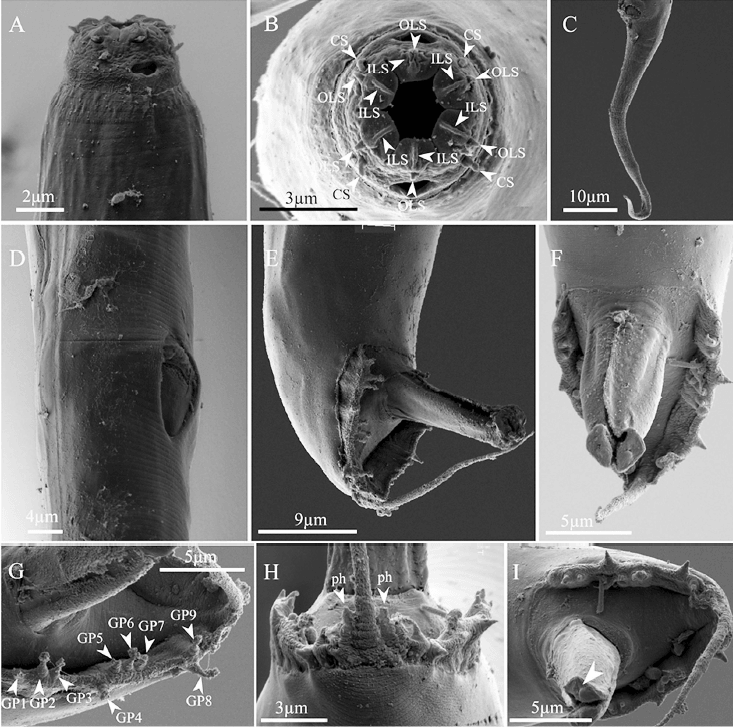
A team of researchers from Tarbiat Modares University in Iran and the University of Jaén in Spain describe a new species of roundworm in the journal 'Nematology'. The new worm belongs to a rare genus, thus the reason why the scientists used the word 'curious' to define this new species in the title of their article.
In addition, this study includes something new: the very first molecular data and scanning electron microscopy images for the genus that this new species belongs to: Diploscapteroides.
“While carrying out the first ever scanning electron microscopy study on this genus we were able to observe the arrangement of the male genital papillae in detail. This allowed us to confirm the existence of precloacal genital papillae, whereas up until now it was believed that the genital papillae of the species belonging to this genus were situated behind the opening of the cloaca. In other words, it was thought that all genital papillae were post-cloacal,” explains Sergio Álvarez to SINC, co-author of the study from the University of Jaén.
Diploscapteroides persicus, the name which has been given to this new worm, is primarily characterised by having females with a length of between 469 and 673 micrometres and a tail measuring between 51 and 99 micrometres long.
By using scanning electron microscopy (SEM) we were able to obtain high resolution surface images of the specimens that were studied. Additionally, SEM allows us to obtain images that are more highly magnified (thus making it possible to observe the surface structures of the nematodes in greater detail) than the images that can be obtained with an optical microscope.
This genus is mainly characterised by having lips that are sclerotised and separated from the adjacent part of the body by a constriction, a stoma that frequently has dorsal knobs, a median bulb, females with an amphidelphic reproductive system and a tapered tail. The males have bursa (lateral cuticular expansions) which are not well developed, as well as separate spicules.
How are new, tiny animals identified?
A morphological and morphometric characterisation must be performed in order to identify any species of nematode. Furthermore, recent studies are also conducting molecular characterisations which allow researchers to analyse the phylogenetic relationships among the different taxa.
“Once the genus has been identified, the specimens under investigation are then compared to known species that have already been identified for that genus; in the event that there are significant differences between the known species and the specimen being studied, the new specimen is described as new,” states Álvarez.
Diploscapteroides persicus was cross-checked against D. boettgeri, D. brevicauda, D. chitinolabiatus, D. coroniger, D. dacchensis and D. flexuosus in order to observe the morphological particularities that distinguish the new species from those mentioned above.
References:
Ghaemi et al. “A curious nematode, Diploscapteroides persicus n. sp. (Nematoda: Rhabditida: Rhabditomorpha), from Iran with a note on the status of the male genital papillae”. Nematology 17 (2015) 1045-1056
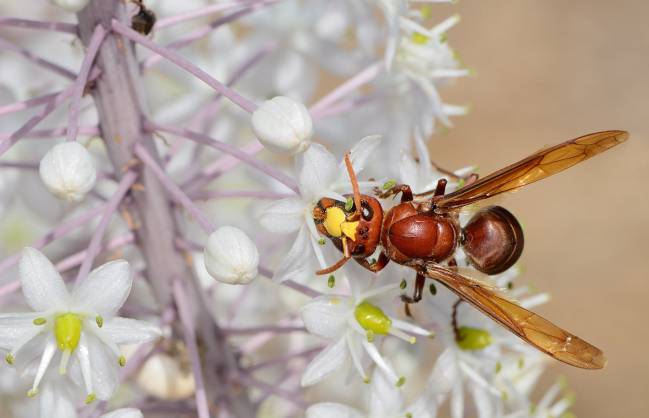
Climate change and globalisation are accelerating the spread of species outside their natural habitat. This is the case of hymenopterans from Asia that are spreading to other continents, whose bites on people are associated with acute kidney diseases. Spanish scientists want to raise awareness of their health consequences.
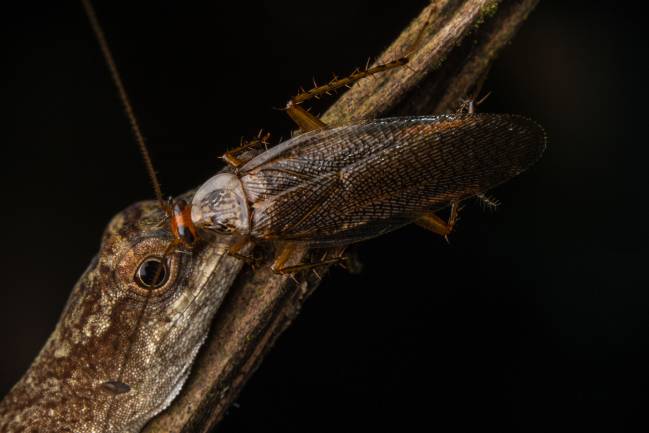
Moths and butterflies are known to complete their diet by drinking the tears of reptiles and birds thanks to the elongated appendage that serves as their mouthpart. But it is not necessary to have such a proboscis to become a “tear drinker”.
Lo sentimos, Inténtalo de nuevo más tarde. .