The average number of traffic incidents and casualties is higher during the week, although the most serious accidents occur between Friday and Sunday. These were the findings of a study carried out by researchers at the University of Almería using Spain’s accident data from the last decade.
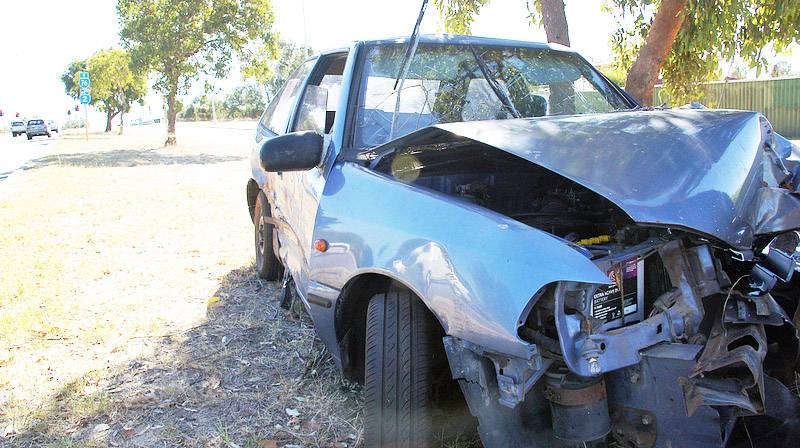
”Contrary to what one might think, most traffic accidents and casualties occur on weekdays, because there are so many of them,” Xavier Lastra, engineer at the University of Almería (UAL), explains to SINC.
“However, the most serious cases, even if less frequent, are recorded at and around the weekend,” the researcher points out, “which is why it would be necessary to adopt different road safety measures for each of these two periods.”
This is the conclusion which appears in the study published by UAL researchers in the journal 'Traffic Injury Prevention’. The results were obtained by applying a method of mathematical analysis (the Fast Fourier Transform) in the analysis of the daily accident rates of Spanish roads between 1998 and 2009.
The sample data show that in the 219 days with the highest number of fatal accidents – 5% of the total – 78 are Saturdays and 93 are Sundays, that is 36% and 42% respectively. With regards to months, June, July and August record the highest number of fatalities on the road.
The mathematical technique has also revealed a fortnightly periodicity in the number of accidents and casualties, both over the whole decade analysed and year-to-year. Peaks in the accident rate tend to coincide with long weekends, short holidays - like Christmas or Easter -, and national and regional holidays.
At provincial level, the study shows that there is a negative correlation between population density and the amount of accidents and fatalities, that is to say, the death rate is higher in the provinces with fewer inhabitants.
“The least populated provinces tend to be mountainous with small or sparsely populated urban centres, which is why their road network has a lower capacity than in more populated provinces, and sometimes lower quality too,” Lastra notes.
Positive road development
The study also reveals the advances that have been made in road safety in recent years, since there is a reduction in the number of people injured per accident of 6.5% in the period 1998-2005 and 11.6% in 2006-2009. These percentages reached 21.8% and 32.1% respectively in the case of fatalities.
This positive trend has continued to the present day. According to the latest data from the Directorate General of Traffic (DGT), 2012 was the ninth consecutive year in which the accident rate fell. Last year 1304 people died in Spain as a result of traffic accidents on intercity roads, 180 fewer than in 2011. In fact, the average number of fatalities in the country has fallen to less than four per day.
Even so, the researchers recommend stepping up safety efforts “especially in sparsely populated provinces, since these still have high values in the rates analyzed,” as well as reducing the intensity and concentration of road journeys in summer and December.
References:
“National and Regional Analysis of Road Accidents in Spain”. Traffic Injury Prevention 14 (5): 486-95, 2013. Doi: 10.1080/15389588.2012.726384.

Now is the centenary of the eclipse that confirmed the theory of general relativity. "Every day, when we search the mobile phone map for a trajectory from our position, we are benefiting from Einstein's being right in making such a powerful and precise theory about what space and time are like," explains astrophysicist and disseminator Javier Armentia.

A statistical analysis of the effects of very hot nights on the death rate in Barcelona’s environment reveals that, during these nocturnal periods, more deaths occur due to natural, respiratory and cardiovascular causes. Although this year would seem to break the trend, the number of ‘tropical’ nights has increased in the Catalan capital over the last few decades.
Lo sentimos, Inténtalo de nuevo más tarde. .