Researcher Amaia Agirre, from the University of the Basque Country, has analysed money management and negotiations in couples who declare themselves equals. One of the main findings is that the ideal of romantic love (widespread in our society) makes defending personal interests incompatible with these feelings.

When a couple starts to negotiate their finances, however directly or indirectly, it becomes clear whether their relationship is equal or not. This is because economic relations put in practice have symbolic consequences, and vice-versa.
This is a fundamental matter to bear in mind given that it establishes the power balance within the relationship and, to a large extent, reflects the economic relations of society.
“Negotiating the management of finances promotes gender equality. However, one of the main obstacles to these agreements within a partnership is the prevailing ideal of romantic love in our society,” Amaia Agirre from the University of the Basque Country (UPV/EHU) tells SINC.
Romantic love is the ideology that projects the couple as an “inseparable and problem-free” unit at the heart of social and affective relations,” adds Agirre. This means considering the couple as a unit and therefore, defending personal and individual interests is seen as a problematic aspect.
For the study, the researcher carried out in-depth interviews of between 90 minutes and 120 minutes in length with 30 different people who labelled themselves as equals in their relationship. She also used quantitative data relating to Basque society gathered by the Basque Institute for Statistics (EUSTAT) which reflected the overall and structural situation.
Three ways of managing money
The three models identified for sharing out capital were: shared and separate money, all money considered a joint resource, or all money kept separately.
“The most usual model for the couples defining themselves as ‘equal’ was to differentiate between shared and separate money, as a way of maintaining individuality compared to the ideal of romantic love, and as a means of avoiding eventual conflicts,” Agirre declares.
The most influential variables for the couple in choosing one or another option are age, whether they have children, and how essential they view the negotiation. The study did not find significant differences between the testimonies of homosexual and heterosexual couples.
“This study can be extrapolated to other parts of Europe. The sample used is from the Basque Country (not the whole of Europe), but there are previous studies by Capitolina Díaz, President of the Association of Women Researchers and Technologists, which corroborate the results and compare the situation between Spain, the US, Holland and Sweden,” concludes the researcher.
References:
Amaia Agirre Miguélez. “El dinero en la pareja: reflexiones sobre relaciones de pareja igualitarias”. RES 23: 9-27, 2015.
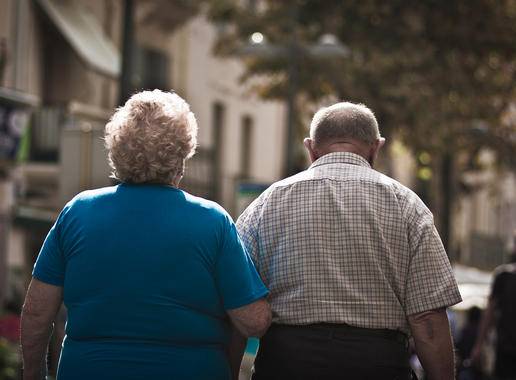
For decades, the elderly in Spain have shown a preference for living at home, either alone or with their partners, instead of sharing a home with relatives of other generations. A study by the University of Granada delves into the reasons for this trend.
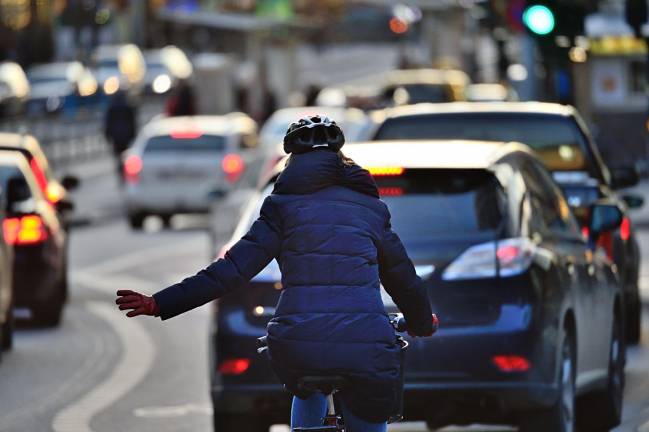
The bicycle is a cheap and ecological way of transport, and it is also a healthy option. This is why the number of cyclists in cities has increased in recent years, but so has the accident rate. A study confirms that these incidents are caused by a combination of inadequate infrastructures and risk behaviour on the part of drivers and cyclists.
Lo sentimos, Inténtalo de nuevo más tarde. .