
Less educated young men are those who share a greater amount of discriminatory content on Facebook, while young university females share the least. According to a study conducted by sociologists at the University of Rovira i Virgili (Spain), there is a feminine way as well as a masculine way to behave on the Internet: males tend to directly allude to ethnic and cultural issues whereas females are less obvious in doing so. The study is part of a European project that aims to fight these behaviours.

Cigarette prices and images on cigarette packets have an impact on women in terms of continuing to smoke or quitting. In fact, less educated women are more responsive to pictorial labels on cigarette packets, as revealed by a study that has analysed, for the first time, the generation differences among female smokers, a group which, despite policy measures, has not stopped growing.

Spanish researchers have conducted studies to find out if there are any differences between Latin American immigrants and Spaniards who have been convicted of violence against women, with regard to their attitudes toward, among other things, aggression and the risk of re-offending. The results show significant disparities in their perceptions of the severity of the crime, its acceptance and victim blaming. However, Latin American and Spanish men respond to batterer intervention programmes in the same way.

Researcher Amaia Agirre, from the University of the Basque Country, has analysed money management and negotiations in couples who declare themselves equals. One of the main findings is that the ideal of romantic love (widespread in our society) makes defending personal interests incompatible with these feelings.
The rate of participation in the workforce by European immigrant women is highly influenced by the traditional values that they bring with them from their countries of origin. The impact of gender norms and other traditional values is so strong that it is twice that of education, according to research carried out at la Universidad Carlos III de Madrid (UC3M), within the framework of their Chairs of Excellence, which include their projects with the support of Banco Santander through Santander universities.

In the week of 8th March, International Working Women’s Day, the debate comes back surrounding paternity and maternity leave. Even in today’s Spain it is women who are the most likely to change their careers, limit their working hours and reduce their salaries to meet family needs, regardless of their socioeconomic status. This is confirmed by an analysis undertaken at Jaume I University and the Complutense University of Madrid.
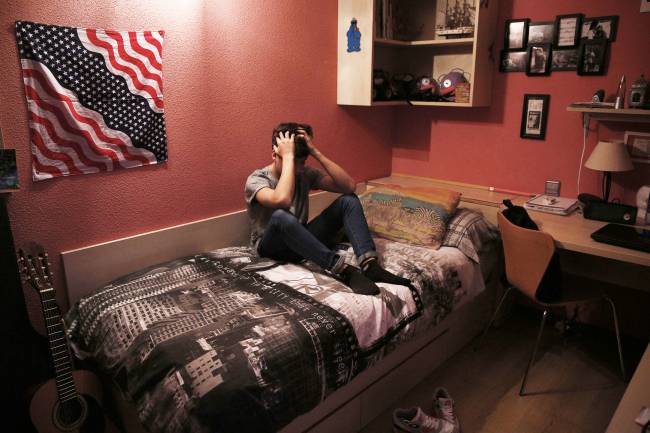
Childhood is one of the stages of life with the greatest risk of suffering violence, despite the greater social awareness and more specialised training of professionals. A study looking into over a thousand Spanish teenagers concludes that 83% of them claim to have fallen victim to at least one form of violence over the course of their lives; 68.6% in the last year.
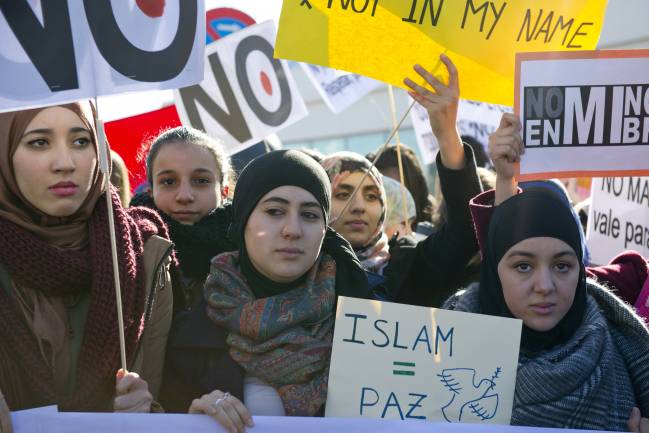
Last week's attacks in Paris, committed in the name of a god, reopen a badly-healed scar in Europe. The world once again turns towards religious fundamentalism. A new study shows that hostility towards other out-groups is not an isolated phenomenon among Muslims living in Europe; but nor is it a synonym of violence. According to the author of the study, Ruud Koopmans, director of the WZB Berlín Social Science Centre (Germany), “Islam is not the problem”.

A Universidad Carlos III de Madrid (UC3M) study analyzes the processes that influence the formation of occupational aspirations in preadolescent boys and girls, with special attention focused on factors that influence in the choice of typical occupations for each gender. According to the research, among other factors that influence in the choice are the studies of the child’s parents and the child’s own self esteem.

In the midst of the current economic crisis, middle class families often encounter problems related to the work-life balance, especially when both spouses are forced to extend their working hours to make ends meet. Researchers from the Department of Social Work at the National University of Distance Education (UNED) have analyzed this phenomenon, which differs by gender. Sagrario Segado, member of the Koinonia research group and one of the authors of the study, discusses its implications.
Lo sentimos, Inténtalo de nuevo más tarde. .