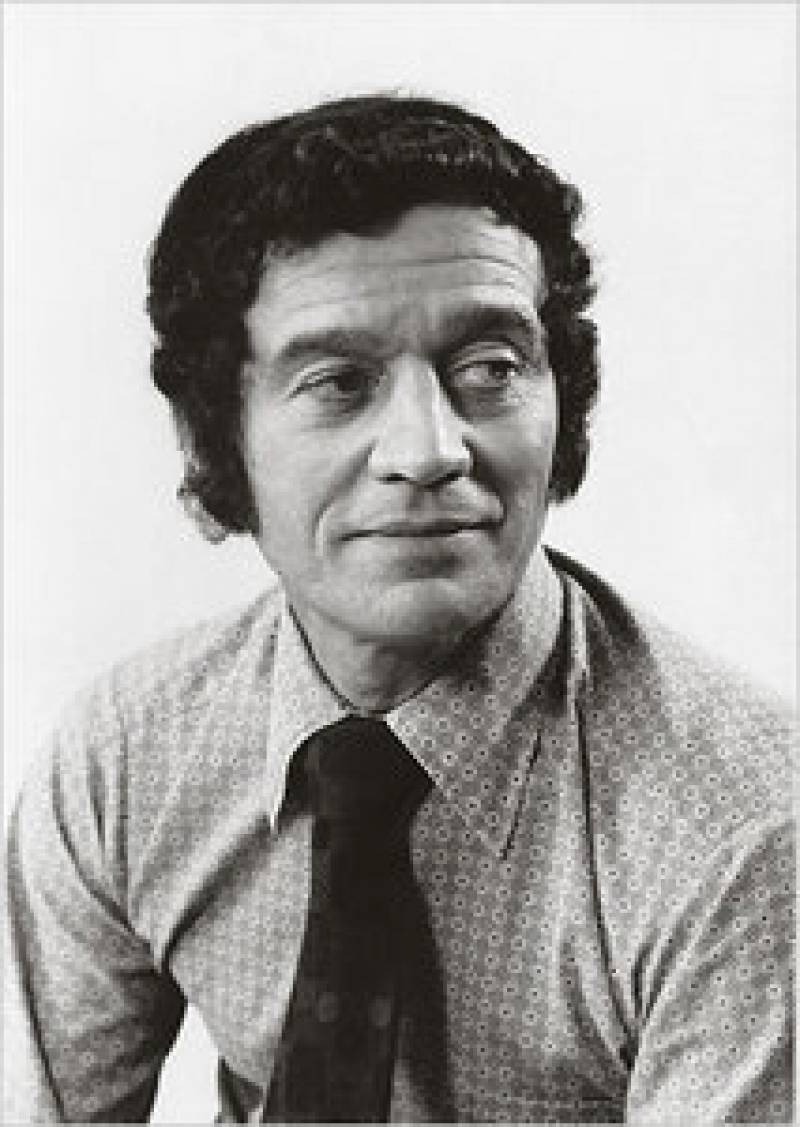
PHOTO GALLERY. Anatole Broyard, literary critic with prostate cancer who did his own in Intoxicated By My Illness: and Other Writings on Life and Death, with a prologue by neurologist and writer Oliver Sacks. / Wikipedia

PHOTO GALLERY. Tony Blair with Christopher Hitchens, author of Mortality, which recounts his last months of esophagus cancer. / Wikipedia
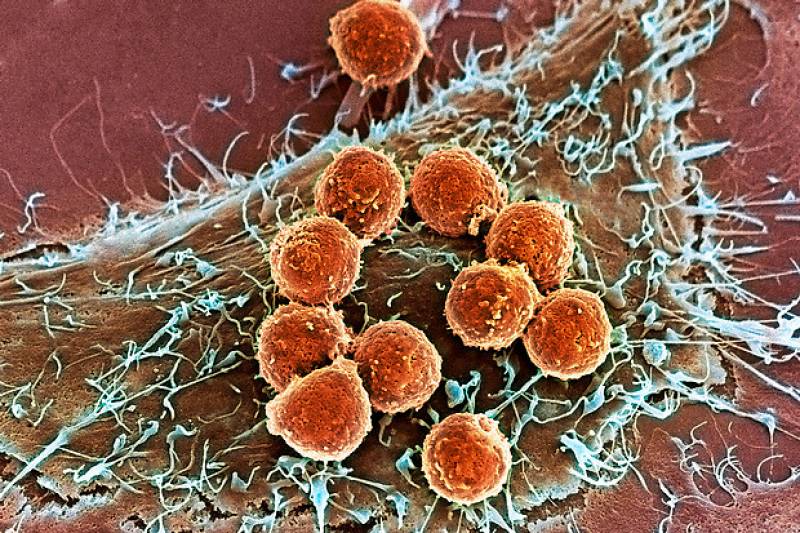
The role of the immune system in fighting tumours has been well-known since 1890 when it was discovered by chance, but it has taken more than a century to gain real importance. The journal ‘Science’ has chosen cancer immunotherapy as the most significant milestone reached in 2013. This represents a change of strategy: cancer is not attacked directly; rather, the immune system’s army is released to battle with all its artillery. We will learn the full scope of these self-defence techniques over the coming years.
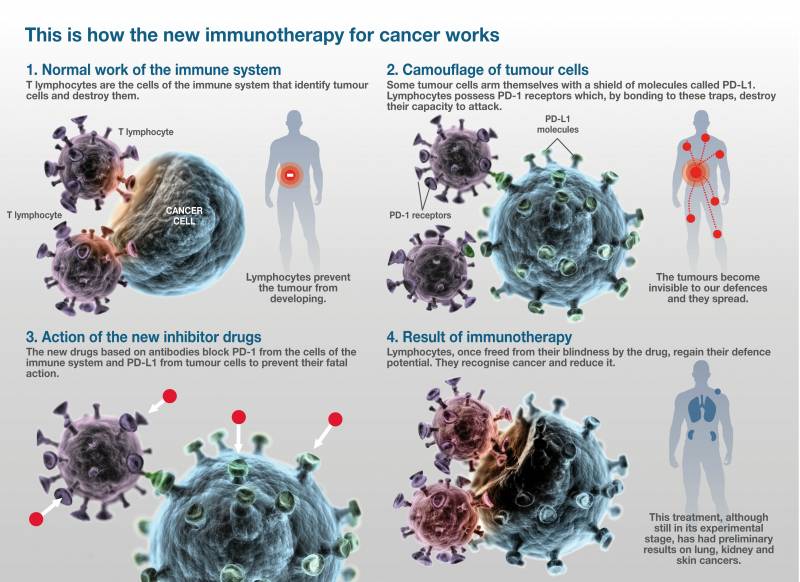
The antibody’s mission is to enable the defences to release their safety brake.
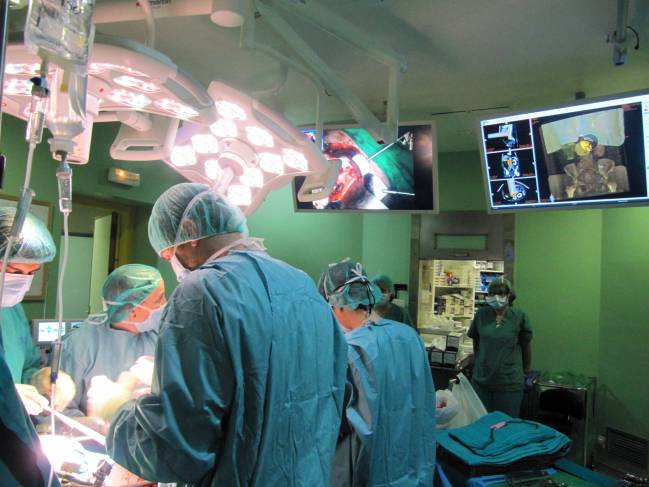
A team of researchers from Gregorio Marañón Hospital, the company GMV and the Universidad Carlos III de Madrid (UC3M) have started the first cancer operation room with a navigator. This image-guided system will allow for increased intraoperative radiotherapy safety.
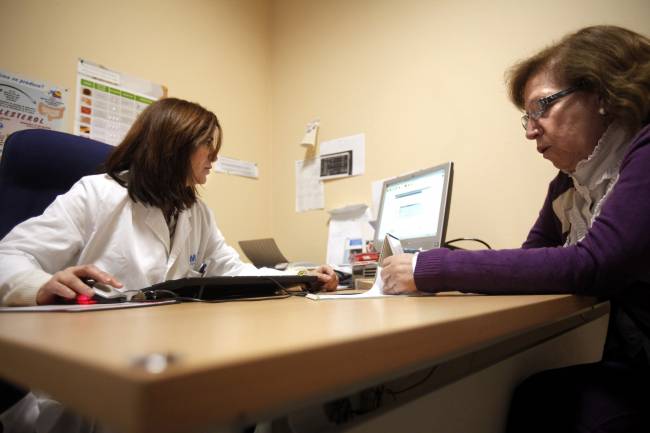
Women diagnosed with invasive breast cancer are 39% more likely to develop a second cancer in a different part of the body. Such is the conclusion of a recent study, pioneered by female Spanish researchers. The study suggests that this increased risk could be due to the similar risk factors involved in both cancers, or to the side effects of the treatment received by breast cáncer patients.
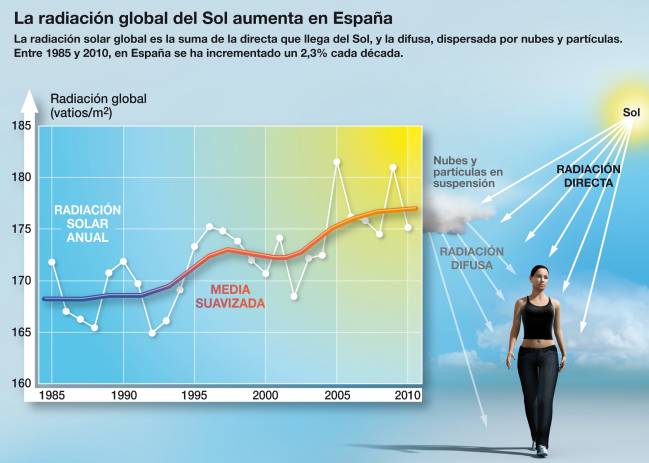
Solar radiation in Spain has increased by 2.3% every decade since the 1980s, according to a study by researchers from the University of Girona and the Federal Institute of Technology (ETH) in Zurich. This increase is linked to the decreased presence of clouds, which has increased the amount of direct radiation reaching us from the Sun.
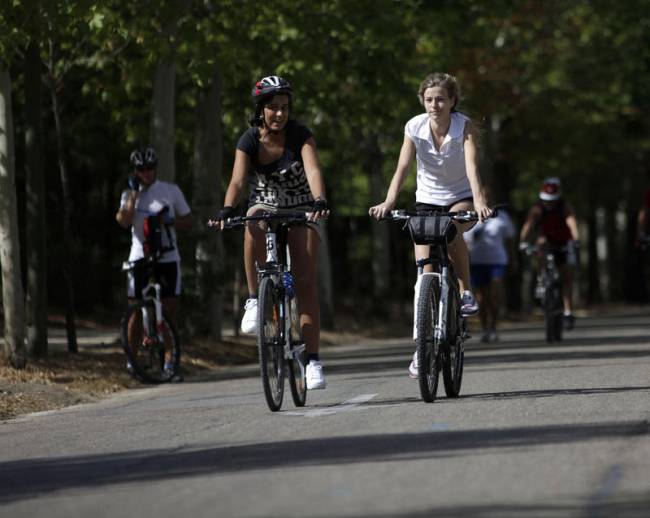
Non-invasive or in situ breast cancer is characterised by the fact that it does not invade or does not multiply in other cells and unlike invasive breast cancer, it is not benefited by physical exercise. The experts suggest that exercise would only have protective effects once the tumour starts to invade the breast tissue.
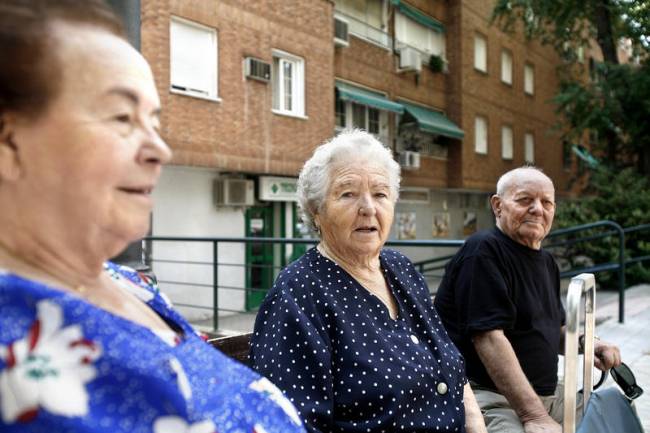
Since 1992 the number of deaths linked to breast cancer in Spain has decreased among young and middle aged patients but not among the elderly. Spanish researchers also predict that it will continue to decline over the next decade, although more slowly as observed up until now.
Lo sentimos, Inténtalo de nuevo más tarde. .