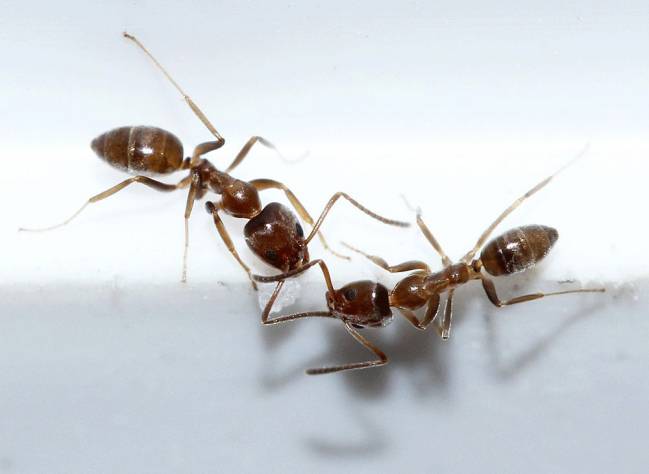
When ants go exploring in search of food they end up choosing collective routes that fit statistical distributions of probability. This has been demonstrated by a team of mathematicians after analysing the trails of a species of Argentine ant. Studies like this could be applied to coordinate the movement of micro-robots in cleaning contaminated areas for example.
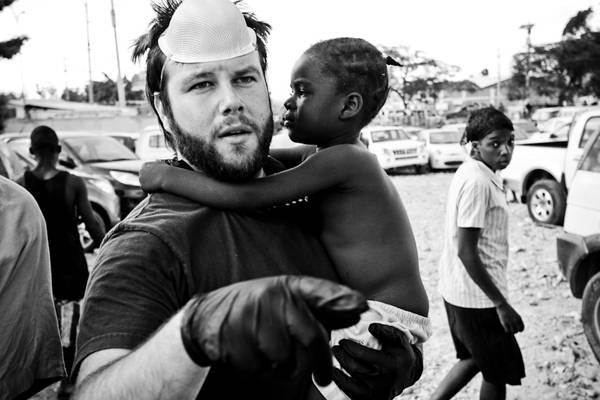
When we must choose between cooperating with others or betraying them, we are more likely to cooperate if they have acted like this with us or if we ourselves have behaved altruistically. We do so because learning reinforces what has gone well for us and not because we imitate successful people. These are the conclusions highlighted in a study conducted by the Carlos III University of Madrid based on the prisoner’s dilemma, a popular model for studying conflict.
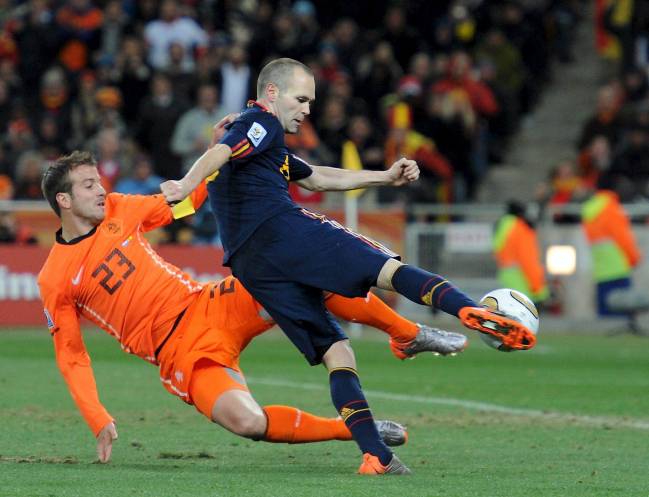
The associative game that the Spanish football team played during the World Cup in South Africa in 2010 was the key to winning the championship. Spanish researchers have analysed the combination of ball passes between the players of the Spanish team during this event to explain the results obtained according to the behaviour of the players and the movements of the ball.

A mathematical and computational study by the Universidad Carlos III of Madrid (UC3M) based on network theory suggests that restructuring certain interbank loans would help to contain the spread of economic crises in the financial system.

1675: Leibniz writes the integral sign ∫ for the first time. / Wearbeard
Lo sentimos, Inténtalo de nuevo más tarde. .