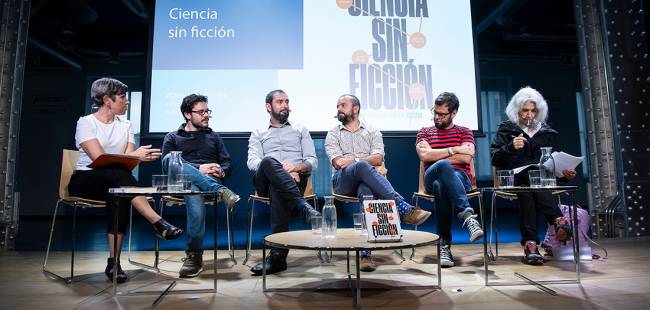
Writing on scientific subjects in the Spanish press is limited to unvarying basics: news, reports and interviews. The book format, on the other hand, is monopolized by the popular monographs. Hence the originality of the volume coordinated by Jesús Méndez with a precise objective: the promotion of novel ways of writing on subjects such as the CRISPR technique, space travel, pseudosciences, quantum computing and the ethical dilemmas of artificial intelligence.
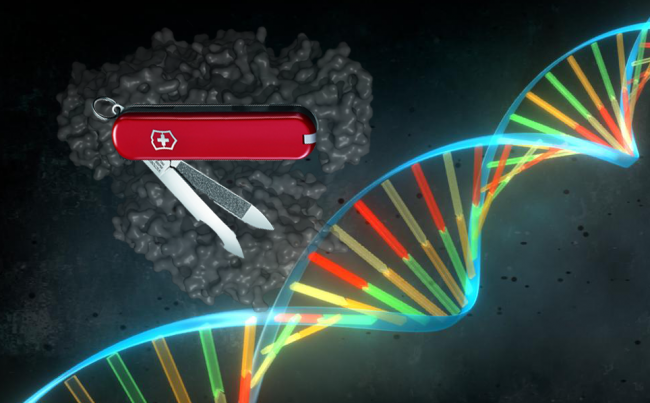
Scientists at the University of Copenhagen, led by the Spanish Professor Guillermo Montoya, are investigating the molecular features of different molecular scissors of the CRISPR-Cas system to shed light on the so-called ‘Swiss-army knives’ of genome editing. Montoya’s research group has visualized the atomic structures of the Cpf1 and Cas9 proteins to analyse each of their properties and peculiarities that make them ideal for different applications in gene modification.
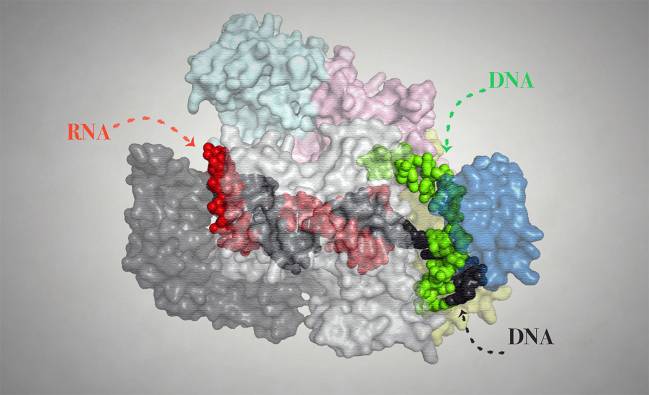
Researchers from the University of Copenhagen (Denmark), led by the Spanish researcher Guillermo Montoya, have discovered how Cpf1, a new molecular scissors unzip and cleave DNA. This member of the CRISPR-Cas family displays a high accuracy, capable of acting like a GPS in order to identify its destination within the intricate map of the genome. The high precision of Cpf1 will improve the use of this type of technology in repairing genetic damage and in other medical and biotechnological applications.
Lo sentimos, Inténtalo de nuevo más tarde. .