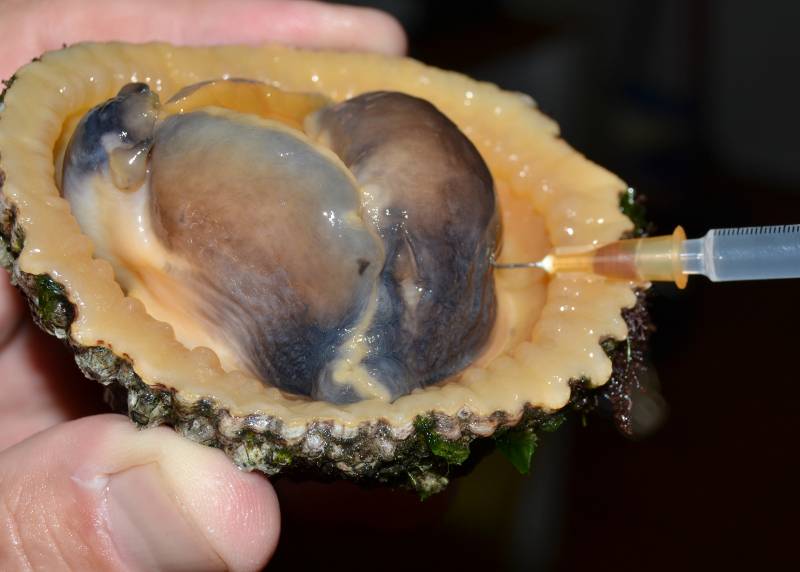
Ejemplar de lapa ferruginosa durante su sexado. En este caso se trataba de una hembra, tal y como ya sugiere el color rojizo que se observa en la base de la jeringuilla. / Iván Acevedo.
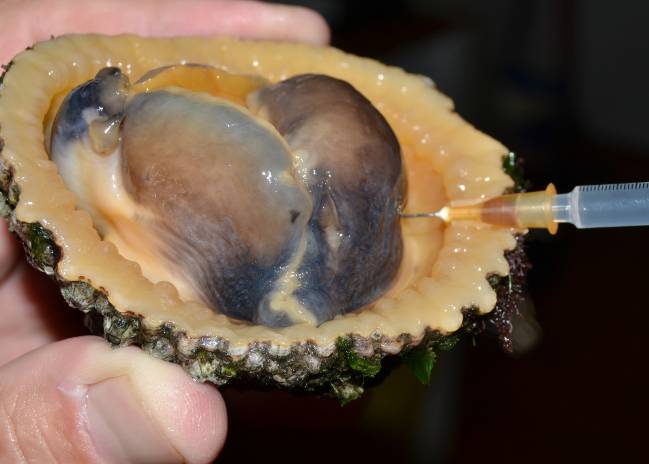
The Ribbed Mediterranean Limpet is one of the most endangered invertebrates of the Mediterranean Sea and is classed as being in danger of extinction. Researchers at the Spanish National Museum of Natural Sciences have discovered their reproductive strategy, consisting in changing sex from male to female and vice versa, which improves their ability to adapt to changes in their environment.

Seven oceanographic research vessels and three light aircrafts from the SCANSII Project have recorded the abundance and distribution of small cetaceans in the waters of the European Atlantic shelf. Their results reveal that the harbour porpoise (Phocoena phocoena, also known as the common porpoise) is the most abundant on these shores and the only species that has moved further southwards to live.
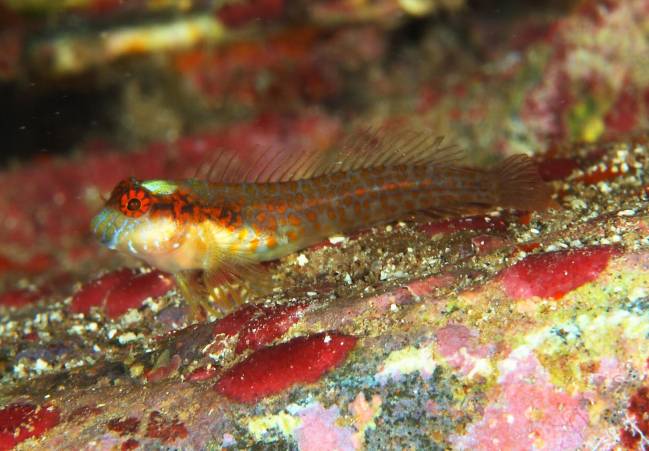
Researchers from Brazil have published data on a new species of fish in the Labrisomidae family on the Brazilian archipelago of Trindade and Martim Vaz in the Atlantic Ocean. It is an endemic species that can only be found in this group of islands due to how far it is from the coast.
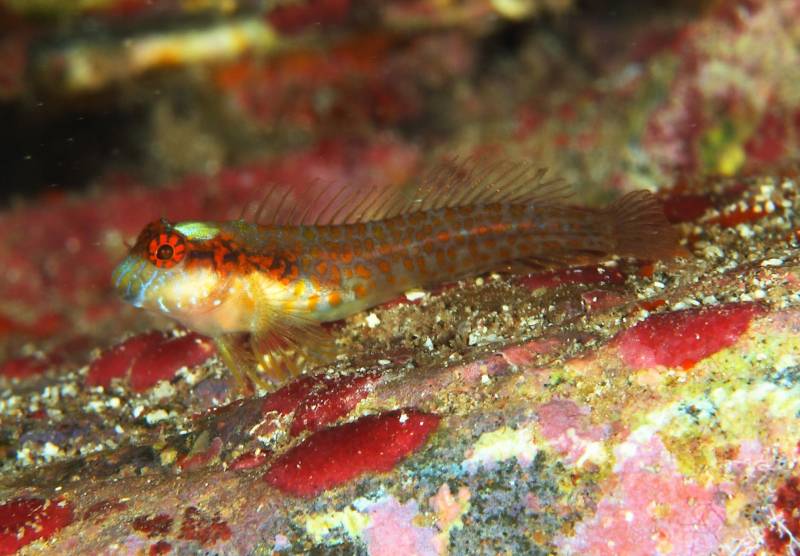
Una nueva especie de pez trambollo, el Hypleurochilus brasil, endémico del archipiélago brasileño de Trinidad y Martín Vaz. / R. Maceira
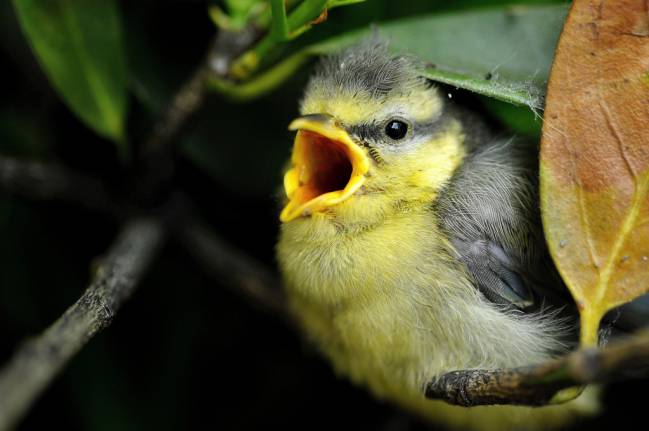
Research from the Experimental Station of Arid Zones has shown for the first time that a bird, the great tit (Parus major), can smell when a tree is infested with caterpillars. These birds are able to identify which plants are infested with insects because of the olfactory signals they emit.

Researchers at the Pablo de Olavide University in Seville have described a new plant in the eastern Mediterranean, growing mainly near the coast. The importance of this discovery is that the plant is the maternal ancestor of a species of hybrid origin, Reseda odorata, used since Roman times due to the fragrance of its flowers, and whose essence was used in the ancient cosmetics industry.

Spanish researchers have observed that female pied flycatchers choose a mate considering the help they will provide when rearing chicks, which will reduce their physiological fatigue. Until now it was thought that the selection of a mate on the basis of plumage was based on the genetic quality of offspring.

Polygala webbiana is a species which was thought to be exclusive to North Africa.However, researchers from the Real Jardín Botánico (Royal Botanic Gardens of Madrid), and the Alcalá and Coimbra Universities have discovered specimens of this plant in Andalucía.

It is not uncommon for birds´ dawn choruses to rouse those living in cities´ residential areas. A study conducted by the University of Seville shows that this phenomenon is mutual. That is to say, some urban birds, like the sparrow and the spotless starling, start singing earlier because they are awoken by anthropogenic noise.
Lo sentimos, Inténtalo de nuevo más tarde. .