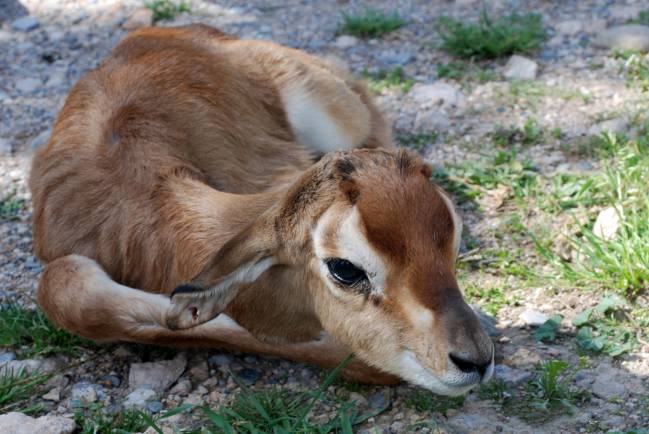
Scientists from the National Museum of Natural Sciences (MNCN-CSIC) have managed to rescue the genotype of young males that were bound to be genetically lost after road kills. The study represents an important step in the conservation of lberian lynx and Mohor gazelle.
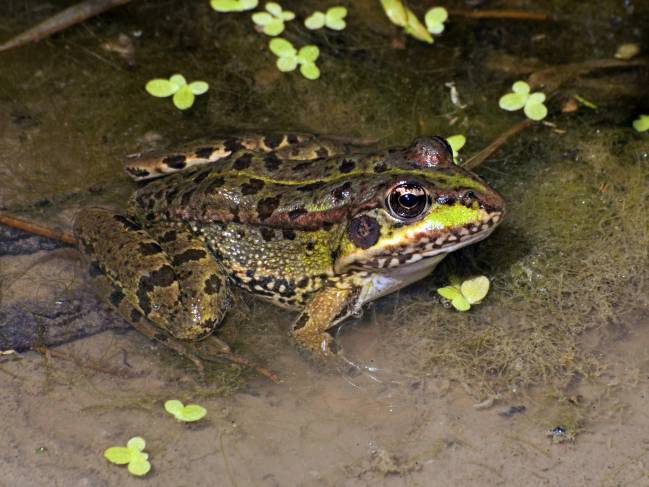
The common frog is one of the amphibians with the highest distribution in the Iberian Peninsula. It reproduces preferably in permanent areas of water where it comes into contact with the red swamp crayfish, which preys on its larvae. Research carried out by the Spaniard Germán Orizaola from the University of Uppsala (Sweden) confirms that the larvae of these frogs have developed a defensive response to the invasive species. They also have deeper tails and larger bodies if they co-exist with the crayfish.
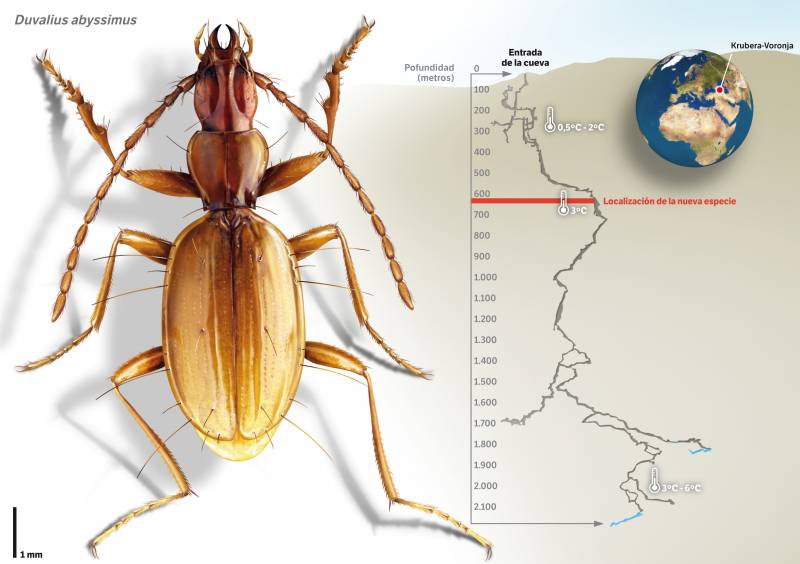
Ilustración de Duvalius abyssimus. / Sinc - José Antonio Peñas.
The unusual habitat of the Krubera cave in the Western Caucasus remains a mystery. Researchers from two Spanish universities have discovered a new species of beetle in the depths of this cave.
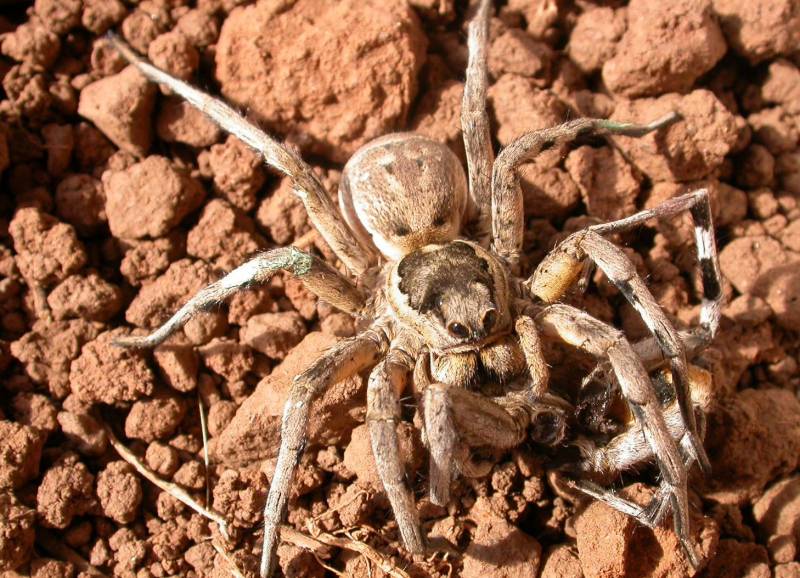
An image of a Mediterranean tarantula, Lycosa hispanica / Eva de Mas
Sexual cannibalism in spiders – the attack and consumption of males by females before or after copulation – is very widespread. A new investigation analyses the reason behind such extreme behaviour, at times even before the females have ensured the sperm’s fertilisation of their eggs.

Fledglings give off signals in order to obtain food from their parents when they come to the nest and, in some species, also when their parents are absent. According to a study by the Spanish National Museum of Natural Sciences, female starlings visit their young more when those sounds produced in their absence increase, while the males do not alter their visitation frequency because of the fledglings’ calls.
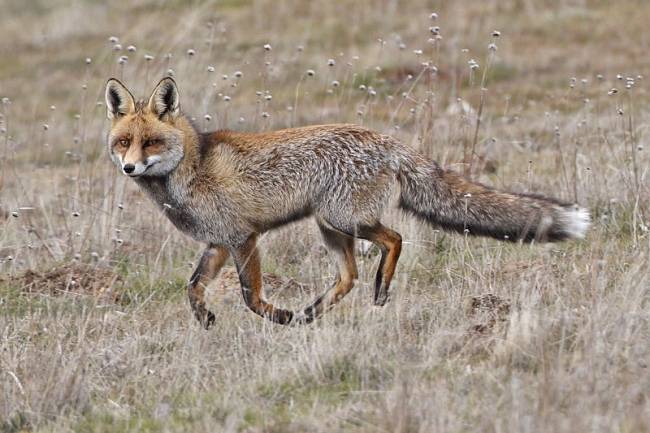
Leishmaniosis is a parasitic disease mostly afflicting dogs, but in impoverished countries it affects over 12 million humans, of whom 70,000 lose their lives every year. Researchers from the LeishmanCeres Group at the University of Extremadura have developed a new method of detecting the illness in animals, based on a single hair sample and only one analysis, which saves cost, time and healthcare personnel.
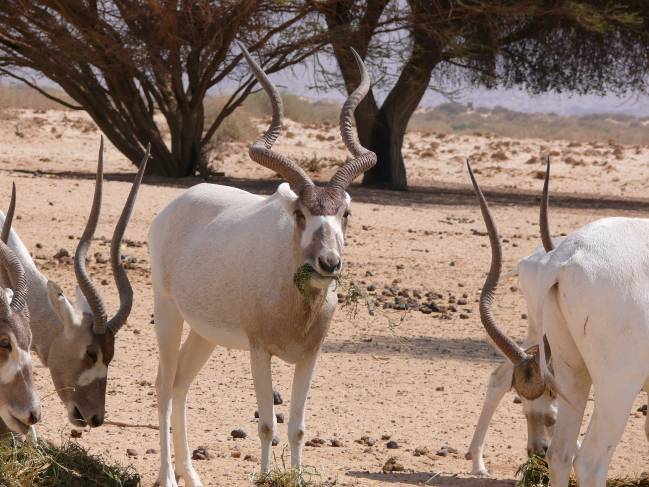
An international team of scientists point out in a study the neglect suffered by the Sahara in conserving its biodiversity. As a result some emblematic species have disappeared (such as the scimitar-horned oryx) and others are on the verge of extinction (the addax, the cheetah and the dama gazelle). The study also states that the rest of the ungulates and large carnivores of the Sahara and the Sahel have lost more than 70% of their area of original distribution.

One of the issues of the Atapuerca sites that generates the most scientific debate is the dating of the strata where the fossils are found. Therefore, researchers at the Spanish National Research Centre for Human Evolution, among others, strive to settle the dates. A study published by the ‘Journal of Archaeological Science’ has clarified that the sediment of Gran Dolina, where the first remains of Homo antecessor were discovered in 1994, is 900,000 years old.
Lo sentimos, Inténtalo de nuevo más tarde. .