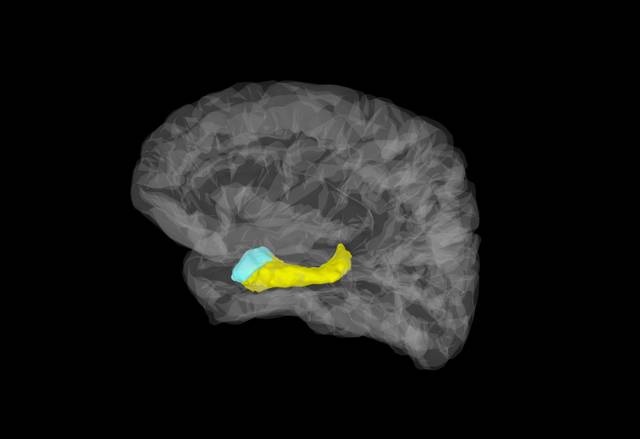
For the first time, an international team of scientists lead by researchers from the Campus de Excelencia Internacional Moncloa (UCM-UPM) has shown that the amygdala in the human brain is able to detect possible threats in the visual environment at ultra-fast time scales. By measuring the electrical activity in the amygdala of patients that had been implanted with electrodes in order to better diagnose their epilepsy, the researchers provide new data on how information travels between the visual and emotional networks.

Spanish researchers have analysed the effect of endurance running training on the stiffness index, a variable that is directly related to bone quality. The results confirm that the greater the race distance that is trained, the better; this can be used, therefore, to prevent the progressive decline in bone mineral density that occurs with age.

Spanish researchers have studied the relationship between hormones and aggressive behaviour in girls and boys between the ages of eight and ten. The results, published in the American Journal of Human Biology, confirm that the subjects who experienced the greatest increase in levels of aggression by ten years of age were those whose cortisol levels had also increased during those two years.

Physical performance after periods of hypoxic training –in low-oxygen conditions– has become a matter of growing controversy within the scientific community. An international study, with the help of Spanish researchers, compared professional and amateur athletes’ knowledge and understanding of this type of training. According to the results, just 25% of amateurs are assessed and monitored by specialists.

Spanish researchers have analysed the effectiveness of salt on sports performance in triathletes. The athletes who added this supplement to their usual hydration routines during the competition took 26 minutes less to complete a medium-distance triathlon course than those who only used sports drinks.
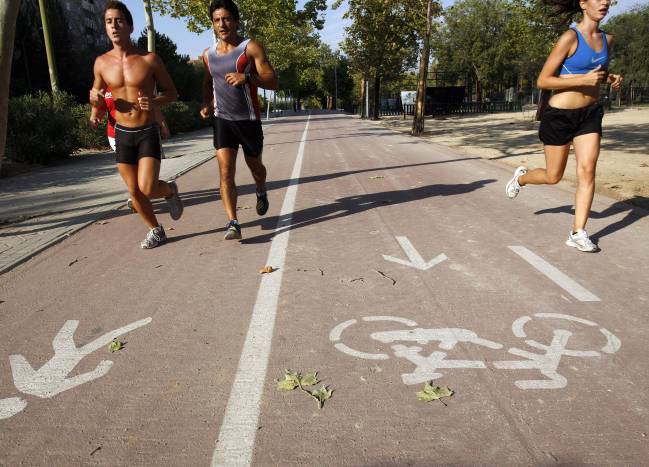
Over the last century, life expectancy for Spaniards has increased by 40 years. A study by the International University of La Rioja highlights the main cause, since 1980, as being the reduced incidence of cardiovascular diseases while other pathologies, such as mental illnesses and certain types of cancer, have been seen to rise. The authors predict that the effects of the economic recession on mortality will show up in the long-term.

A new study analyses the violent behaviours exhibited towards pregnant women. While 21% of women suffer emotional violence during pregnancy, 3.6% encounter physical or sexual violence. Furthermore, 36.1% of those who reported physical violence claimed that it happened “very often” or “daily”.
A study analysing the positive and negative effects of energy drinks on athletes has seen that, although in principle their sports performance was seen to improve by between 3% and 7%, there was also an increase in the frequency of insomnia, nervousness and the level of stimulation in the hours following competition.
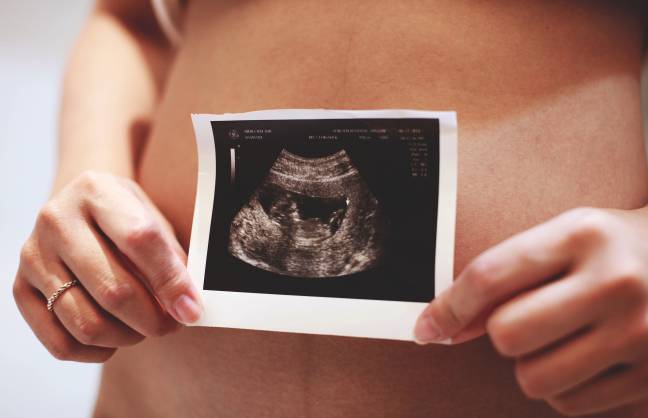
A new study analyses the survival rates in Spain of newborns with a gestational age under 26 weeks. The results show that survival under 23 weeks is ‘exceptional’, although other factors such as birth weight and sex also have an influence.

Resilience, a person’s ability to overcome adverse circumstances, is the main quality associated with pain tolerance among patients and their adjustment to chronic pain. This is the result of a new study carried out at the University of Málaga that shows that the effect of gender on this ability is not as significant as originally thought.
Lo sentimos, Inténtalo de nuevo más tarde. .