
The ability of the brain to synchronize with the tone and intonation of speech influences how language is processed. This concludes a study by the Basque research center BCBL, whose results could help design more effective activities to train the brain in order to avoid future disorders such as dyslexia.
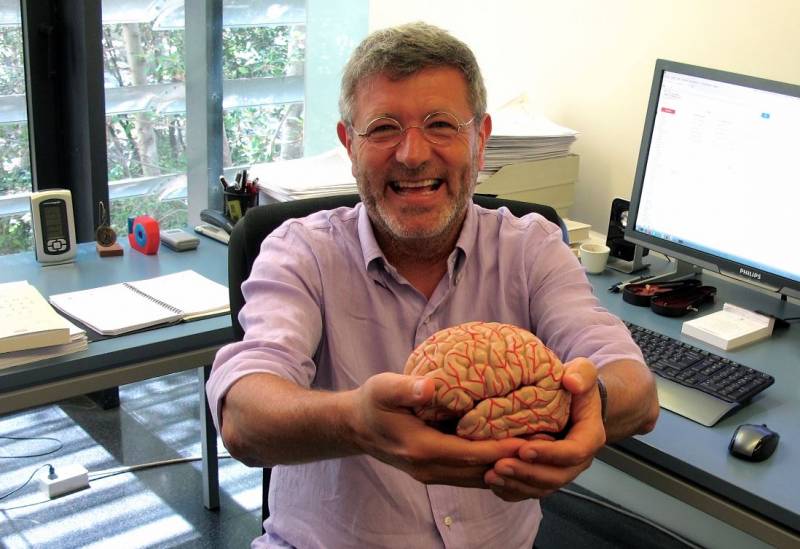
The neuroscientist Gustavo Deco jokes: "Basically, we do not know anything about the brain. This Argentine doctor, a triple doctor in Physics, Computing and Psychology, hopes that the joined efforts of all disciplines reveal the secrets of the most complex organ. He is currently researching the circuitous network of connections that are activated when we do something as apparently simple as distinguishing objects with our sight.

A region of the brain that extends through both hemispheres, the planum temporale, is larger in the left than in the right hemisphere. The finding was linked in the 1960s with the hosting of language processing in the left hemisphere, but today European researchers show that this asymmetry is not a marker of language lateralization.

A study conducted by BCBL, the Basque research center, reveals that action video games improve visual attention and reading ability, two of the deficits suffered by people with dyslexia. The objective is to use the most useful elements of videogames in new software without violent connotations that help to treat this cognitive disorder.
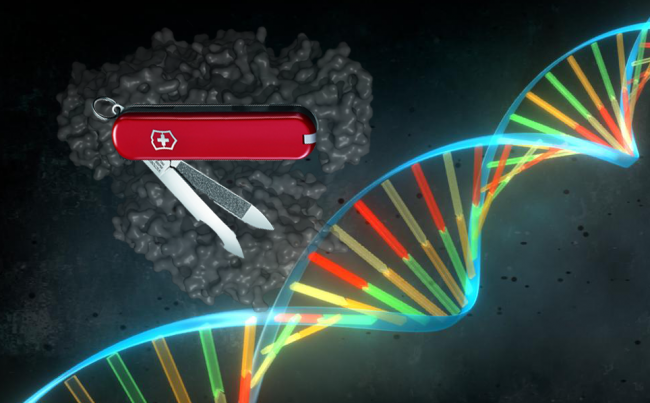
Scientists at the University of Copenhagen, led by the Spanish Professor Guillermo Montoya, are investigating the molecular features of different molecular scissors of the CRISPR-Cas system to shed light on the so-called ‘Swiss-army knives’ of genome editing. Montoya’s research group has visualized the atomic structures of the Cpf1 and Cas9 proteins to analyse each of their properties and peculiarities that make them ideal for different applications in gene modification.

When we sleep, our organism goes through different phases of sleep, however the brain remains interconnected during non-REM sleep, which was thought not to happen. The finding by a European team of researchers has also made it possible to analyse the scientific basis of consciousness, an increasingly important field of neuroscience.
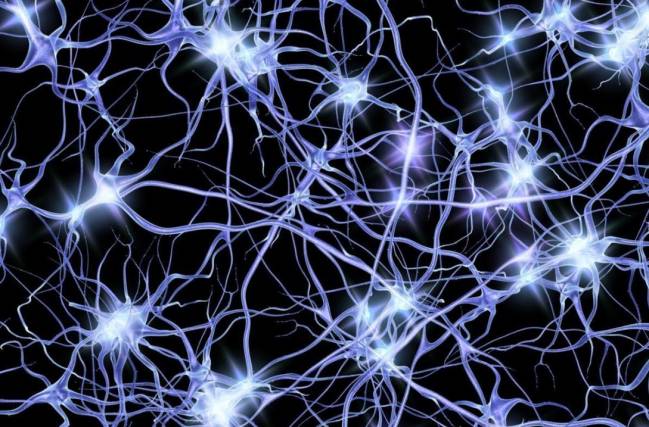
While unconscious during deep sleep, millions of neurons’ activity travels across the cerebral cortex. This phenomenon, known as slow waves, is related to the consolidation of memory. The European project called SloW Dyn, led by Spanish scientists, has now revealed anomalies in this activity in mice displaying a decline similar to Alzheimer’s.

A study by European and Latin American researchers has shown that strawberry extract can inhibit the spread of laboratory-grown breast cancer cells, even when they are inoculated in female mice to induce tumours. However, the scientists do point out that these results from animal testing can not be extrapolated to humans.

The unpleasant sensation sparked by the nervous system when confronted with a harmful stimulus can be alleviated by blocking a genetic marker that switches off the activity of the neurons involved. Jose Vicente Torres Pérez, a Spanish researcher who works at Imperial College in London, has trialled this innovative pain relief therapy on mice with serious burns. The aim is to use his findings to help burn victims.

Three Spanish researchers have discovered that bilinguals use different neural networks to read languages that are pronounced as they are written – such as the Basque language – from those in which this correspondence does not exist, like English. The results are valuable for teaching reading to adults and children.
Lo sentimos, Inténtalo de nuevo más tarde. .